
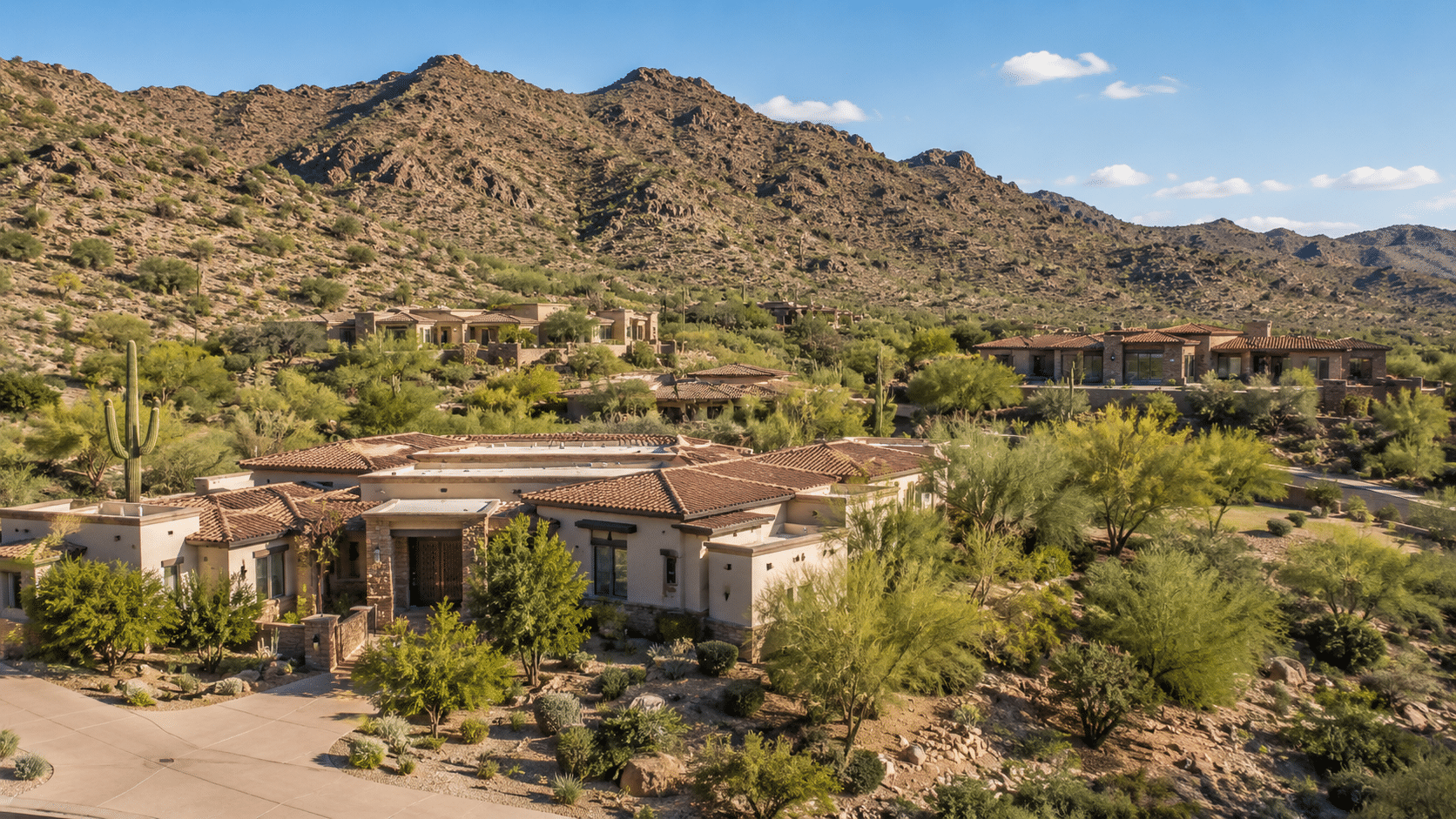
South Mountain Village real estate sits on the north slope of the largest mountain preserve in the City of Phoenix. Homes for sale in South Mountain are anchored by the South Mountain Park and Preserve — 16,000+ acres of protected Sonoran Desert that defines the village’s southern boundary and shapes how residents experience daily life here. South Mountain Village is one of the City of Phoenix urban villages south of the Salt River, with boundaries that run roughly from the river north to the mountain ridge south, and from Central Avenue west to 51st Avenue.
Homes in South Mountain range from historic 1920s bungalows along Central Avenue to brand-new master-planned construction along the Loop 202 South Mountain Freeway corridor that opened in late 2019. South Mountain real estate is generally more affordable than central or north Phoenix submarkets, and the village’s character — equestrian land on the west, established South Phoenix homes for sale through the historic core, foothills lots along the preserve line — makes it one of the most varied real estate markets in the city. This guide walks through prices, neighborhoods, schools, commute, and what to expect when buying or selling here.
South Mountain Village splits into four broadly distinct geographic zones, and the differences matter when you are touring. South Mountain Foothills — the strip of homes pressed against the preserve line at the village’s southern edge — carries the higher end of the inventory. Lots here run larger, mountain views are common, and trail access at Pima Canyon, Telegraph Pass, and Holbert sits within walking distance for many addresses. Custom estates and foothills lots dominate, and prices reflect both the views and the scarcity of buildable land along the preserve.
Foothills Reserve and the newer master-planned community pockets along the Loop 202 corridor have transformed the western and southwestern edge of the village since the freeway opened in late 2019. Buyers comparing new construction here often also tour Laveen Village inventory directly to the west, since the two villages share a school district overlap and a similar new-build profile.
Baseline Road runs east-west through the center of the village and anchors the historic core — including the legacy flower-garden corridor of Japanese-American family farms that defined this stretch of South Phoenix through the twentieth century. Established single-family homes, small ranch parcels, and equestrian zoning dominate north of Baseline.
The Central Avenue spine running south from the Salt River carries the village’s oldest inventory: 1920s and 1930s bungalows, small lot infill, and historic neighborhoods that read more like the broader Phoenix real estate market than the foothills experience further south. South Mountain Village neighborhoods are not interchangeable, and the right tour starts with the zone, not the listing.
Note for buyers searching the area: South Mountain Village sits on the north slope of the mountain. The Ahwatukee Foothills community sits on the opposite south slope and is a separate community entirely — the two are connected only by the South Mountain Park and Preserve itself.
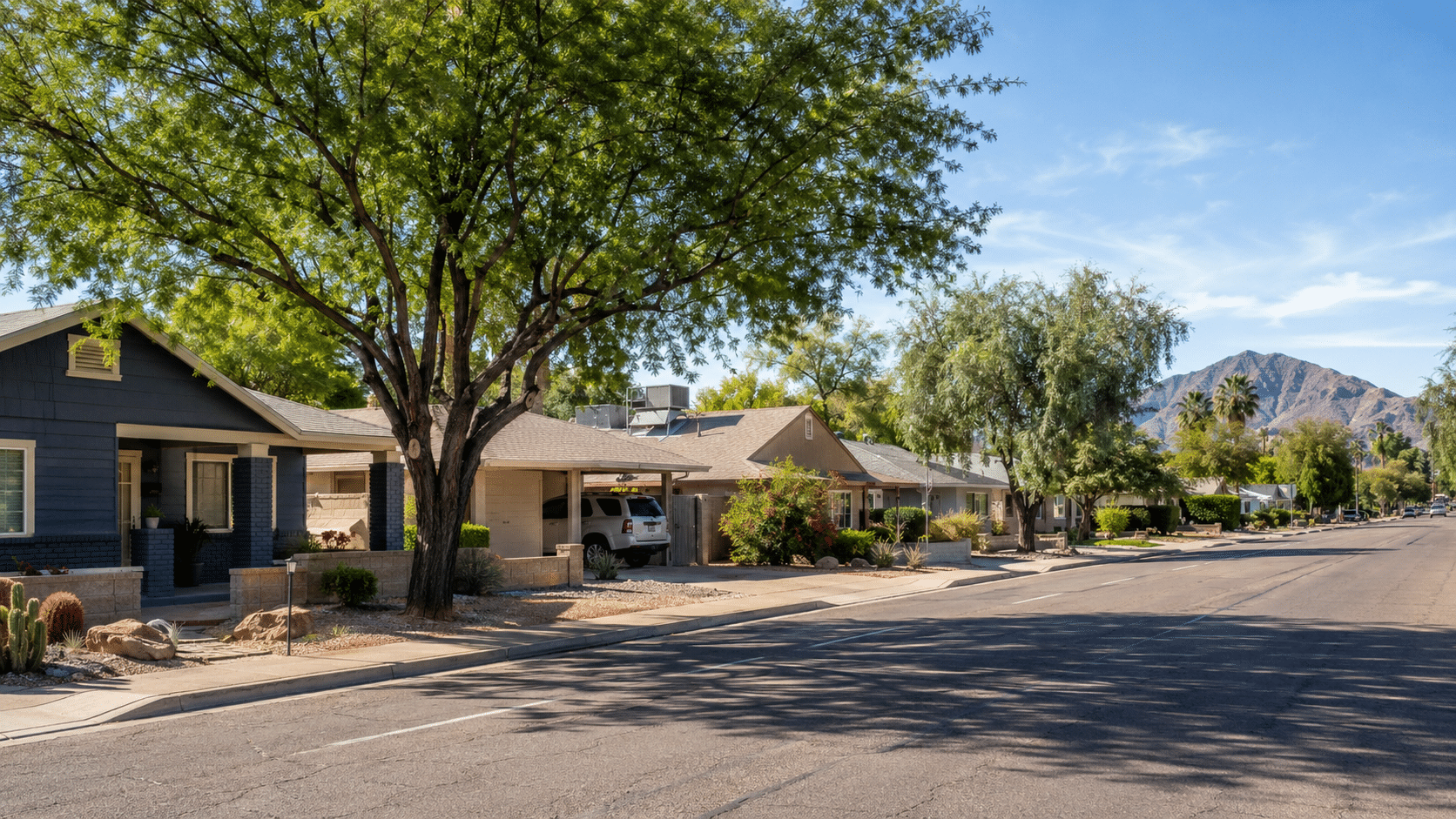
The South Mountain Village real estate market trends affordable relative to central and north Phoenix submarkets, and the inventory spread is wider than any single price band can describe. Entry-level single-family homes along the Central Avenue corridor and through the established South Phoenix grid start in the low-to-mid $300s. Newer master-planned homes near the Loop 202 South Mountain Freeway corridor cluster between the high $400s and mid $700s. Foothills lots and custom estates along the preserve line — where mountain views and larger acreage drive pricing — reach into the seven figures for premium addresses.
Inventory mechanics in South Mountain Village have shifted since 2019, when the freeway corridor opened up the southwestern edge of the village to a wave of new-construction development. List prices here have generally tracked the Phoenix housing market at large in direction, though the village’s affordability cushion has historically made the South Mountain Village market more resilient on the downside than luxury-heavy submarkets to the north. Comparable sales along the freeway corridor often pull from Laveen Village real estate to the west, since the two communities share builders, school zones, and floor plans across the village boundary.
Days on market runs faster in the entry- and mid-priced ranges than at the custom-estate tier, where buyers are fewer and individual properties are more idiosyncratic. Across Maricopa County, South Mountain Village has generally tracked the broader county trend in pace and direction, with the village’s newer master-planned pockets seeing the most active turnover. For sellers, the practical implication is that the right list price depends heavily on which of the four South Mountain zones the home sits in — pricing strategy is not interchangeable across the village.
Most homes for sale in South Mountain Village feed elementary and middle school grades into the Roosevelt Elementary School District, with smaller pockets along the western edge served by Laveen Elementary School District depending on the home’s address. High school grades fall under the Phoenix Union High School District for nearly all of South Mountain Village. South Mountain High School sits on 24th Street north of Baseline and serves the village’s historic core; Cesar Chavez High School serves portions of the western edge. As with every Phoenix urban village, the specific campus assignment depends on the home address — verify the current attendance boundary with the district before assuming proximity equals assignment, because the lines do shift.
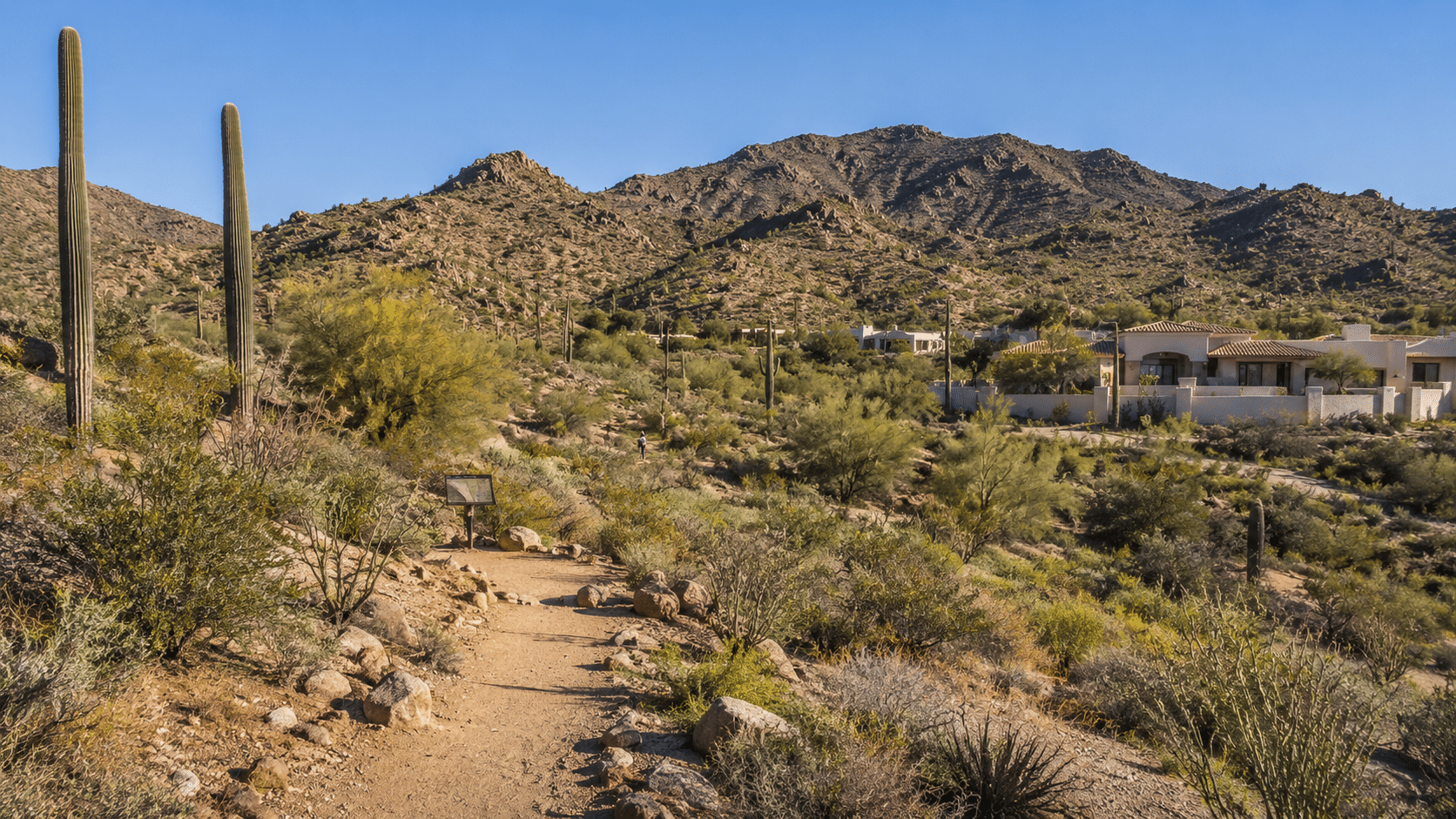
The lifestyle case for South Mountain Village real estate is built on the preserve. South Mountain Park and Preserve runs the village’s entire southern boundary, with trailheads scattered from Pima Canyon on the east through Telegraph Pass and Holbert to the west. The Dobbins Lookout road climbs to a 2,330-foot panoramic point that overlooks downtown Phoenix and the South Mountain Village street grid — one of the metro’s most accessible high-elevation views. The South Mountain Environmental Education Center near the main park entrance handles school-group programming and weekend nature walks.
Cultural and historic landmarks run thick through the village. Mystery Castle, the 18-room folk-art structure built piece by piece by Boyce Luther Gulley between 1930 and 1945, sits near Mineral Road south of Baseline and remains one of the city’s most photographed lesser-known landmarks. The Baseline corridor’s Japanese-American farming heritage shaped the cultural identity of the area through the twentieth century and still anchors community memory.
Day-to-day life here runs more residential than the loft-and-light-rail density of central Phoenix and more historic than the master-planned edge of north Phoenix.
What buyers actually find in homes in South Mountain Village is a wider inventory mix than nearly any other Phoenix urban village. Single-family homes dominate the count, but the build eras and property profiles diverge sharply across the four geographic zones. North of Baseline Road and through the historic Central Avenue corridor, historic bungalows from the 1920s and 1930s sit alongside mid-century ranch homes on small lots — much of this inventory has owner-occupier history measured in decades, and quality of preservation varies widely block by block.
The western edge of South Mountain Village carries some of the city’s most significant remaining equestrian zoning. Horse properties on half-acre to multi-acre parcels still operate here, with barn structures, arenas, and direct riding access to the preserve trails on the village’s southern boundary. Buyers shopping equestrian inventory should plan for a separate inspection track — well systems, septic, and zoning compliance all carry independent due-diligence questions.
Along the Loop 202 South Mountain Freeway corridor, master-planned community new construction has reshaped the inventory landscape since 2019. Three- and four-bedroom production homes in the 1,800-to-2,800-square-foot range dominate this band, with custom estates and estate-tier lots filling the higher price points closer to the preserve.
The foothills line south of Baseline carries the largest concentration of foothills lots with native desert landscaping and full mountain exposure. Condo and townhome inventory in South Mountain homes runs thinner than single-family stock but does exist along the Central Avenue corridor and in a handful of newer attached-product communities. The village inventory will not look like any single product type — pre-tour clarity about which zone you want is the most useful filter a South Mountain Village real estate buyer can apply early.
South Mountain Village’s connectivity profile changed more between 2019 and the present than at any earlier point in its history. The Loop 202 South Mountain Freeway opened in late 2019 and now runs along the western and southwestern edge of the village, connecting Interstate 10 at the eastern Salt River crossing through to I-10 again on the west side near Avondale. The result is a freeway corridor that lets South Mountain homes for sale residents reach Estrella Village and the broader West Valley in twenty minutes that used to take forty, and that connects southward to Rio Vista Village and the Laveen-area corridors without crossing surface arterials.
Interstate 10 runs along the northern edge of the village above the Salt River and remains the primary commute artery toward downtown Phoenix and the East Valley. Phoenix Sky Harbor International Airport sits roughly ten to fifteen minutes north of most South Mountain Village addresses via I-10 or Central Avenue, depending on which zone the home sits in.
The Valley Metro Rail South Central Extension carries light rail service south from the downtown core down Central Avenue into the northern portion of South Mountain Village — the first light rail line inside the village’s boundary and a significant connectivity upgrade for the Central Avenue corridor that links the village directly into the Central City urban village and the downtown employment cluster. Light rail proximity has begun to show up in transit-oriented development plans along Central Avenue, and buyers who value transit access should weight Central Avenue addresses accordingly.
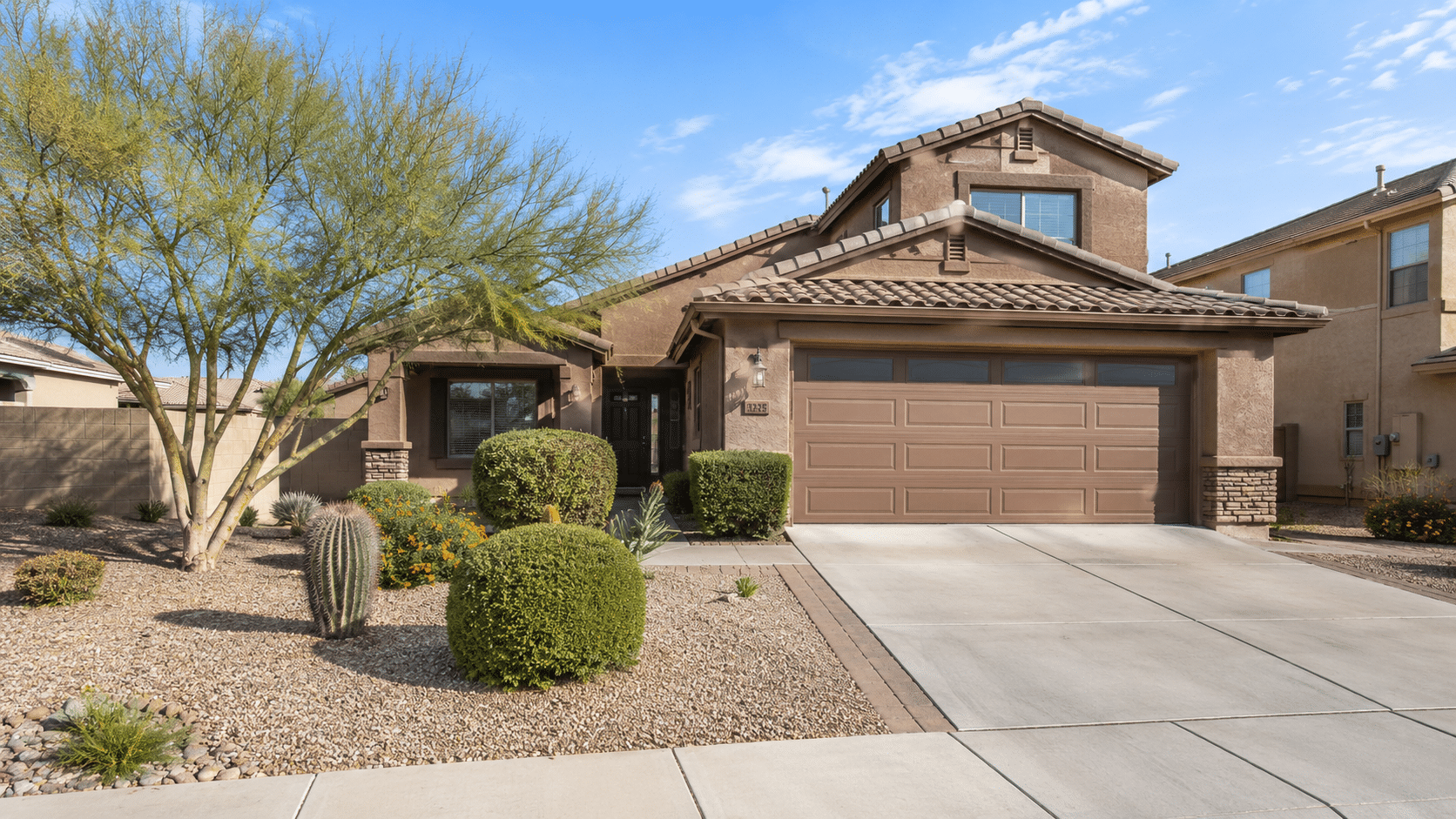
The Loop 202 South Mountain Freeway opening in 2019 reset the South Mountain Village real estate trajectory in a way that still shapes pricing and inventory decisions today. The corridor unlocked previously isolated parcels for new-construction development, brought new buyers into the village from the West Valley and the East Valley simultaneously, and pulled comparable-sales benchmarks upward across the western and southwestern zones. The result is a village where pricing strategy depends heavily on which side of the freeway-corridor transition the home sits.
For buyers, the practical implication is that a comparative market analysis in South Mountain Village real estate needs to account for the freeway timing. A 2018 sale three blocks from a current listing may bear little resemblance to current market value if the surrounding inventory has turned over since the corridor opened. Pulling comparable sales from the right post-2019 window matters more here than in slower-moving villages elsewhere in Phoenix. The buyer’s guide on carlchapmanrealtor.com walks through the mortgage pre-approval and contingency strategy that helps buyers compete for new-construction and resale inventory in moving markets like this one.
For sellers of South Mountain homes, the freeway transition cuts the opposite way — properly positioned listings in the corridor-influenced zones can outperform the broader Maricopa County trend, but mis-priced homes that lean on stale comparable sales from before the corridor opened will sit and force price reductions. Working through seller concessions strategy, the sale-to-list ratio in your specific zone, and the realistic days-on-market expectation matters more than in a static market. The seller’s guide covers the comparative market analysis approach we use for homes for sale in South Mountain Village across all four zones.
South Mountain Village is one of the most varied real estate markets in the City of Phoenix — historic bungalows along Central Avenue, equestrian parcels on the western edge, master-planned new construction along the Loop 202 corridor, and foothills lots pressed against the largest mountain preserve in the city. The village does not reward generic search. The right home depends on which of the four South Mountain zones fits the way you actually want to live. Carl Chapman works directly in this village and across the Phoenix urban village landscape, helping buyers and sellers read South Mountain Village market conditions zone-by-zone, pull the right comparable sales for the right neighborhood, and avoid the pricing mistakes that come from treating South Mountain Village real estate as a single uniform submarket.
If you are starting a search for homes for sale in South Mountain Village, preparing a sale, or want an honest read on what your South Mountain home is worth right now, reach out. We will walk through your timeline, your priorities, and what the next reasonable step looks like.
Property taxes in Maricopa County are calculated annually based on assessed value set by the County Assessor. For South Mountain Village homeowners, the typical bill falls below one percent of assessed value before any school override or special district adjustments. Several factors can shift individual bills slightly higher or lower, including school override votes and any neighborhood-specific community facilities district fees that apply along the Loop 202 corridor in newer master-planned communities. Property taxes in homes for sale in South Mountain Village run broadly comparable to other Phoenix urban villages at similar price points, with the freeway-corridor new construction sometimes carrying small additional district assessments. Confirm the current rate and any overrides with your title company during escrow.
HOA structure in South Mountain Village varies sharply by zone. The historic Central Avenue corridor and most of the established neighborhoods north of Baseline Road carry no HOA on the majority of homes. The newer master-planned community pockets along the Loop 202 South Mountain Freeway corridor on the western and southwestern edges of the village almost always carry an HOA, often with modest-to-meaningful annual dues. The foothills lots along the preserve line are split — some carry HOA-style associations, others do not. Equestrian properties on the western edge typically operate without an HOA but may have deed restrictions on livestock and parcel use. Always request the full disclosure packet before writing an offer on homes for sale in South Mountain Village.
Most South Mountain Village homes feed elementary and middle school grades into the Roosevelt Elementary School District, with the western edge of the village split into the Laveen Elementary School District depending on the home’s specific address. High school grades fall under the Phoenix Union High School District for nearly all of South Mountain Village, with South Mountain High School serving the historic core and Cesar Chavez High School serving portions of the village’s western edge. Charter and choice options exist throughout. Specific campus assignment depends on the home address, and the attendance boundary lines do shift. Verify the current assignment directly with each district before relying on it during a purchase decision.
Commute times from South Mountain Village to downtown Phoenix run roughly ten to twenty minutes by car depending on the home’s zone within the village and current traffic. Homes along the Central Avenue corridor in the village’s northern third sit closest to downtown and now have a direct light rail option via the Valley Metro Rail South Central Extension running Central Avenue into the urban core. Homes along the Loop 202 South Mountain Freeway corridor in the southwestern part of the village take a slightly longer surface-to-freeway route via Interstate 10 or 7th Avenue. Phoenix Sky Harbor International Airport sits approximately ten to fifteen minutes north of most addresses across South Mountain Village real estate.
Yes — new construction in South Mountain Village is concentrated along the Loop 202 South Mountain Freeway corridor on the village’s western and southwestern edges, where the freeway opening in late 2019 unlocked previously isolated parcels for master-planned community development. Several active builders operate in the corridor with three- and four-bedroom production homes in the high $400s to mid $700s. Tear-down rebuilds occur occasionally at the custom-estate foothills tier along the preserve line, and small-scale infill new construction shows up across the historic Central Avenue and Baseline Road corridors. New construction inventory is substantially more available here than in fully built-out Phoenix urban villages like Encanto or Alhambra.
Horse properties and equestrian-zoned parcels still exist in South Mountain Village, concentrated on the western edge of the village south of Baseline Road and the area north of the preserve line. Lot sizes for equestrian inventory in homes in South Mountain Village range from half-acre parcels up to multi-acre estates, with barn structures, riding arenas, and direct trail access into the South Mountain Park and Preserve on the most desirable lots. Inventory in this product type is thinner than elsewhere in the village and turns over slowly — many equestrian homeowners hold their properties for decades. Buyers shopping horse properties should plan for separate due-diligence around well, septic, zoning, and the specific permitted livestock counts.
The most natural cross-village comparisons for South Mountain Village buyers depend on what is drawing you to the area. Buyers focused on new-construction and master-planned community inventory in the freeway corridor often tour Laveen Village directly to the west, since both villages share builders, school zones, and floor plans across the boundary. Buyers prioritizing downtown access and historic-home character also weigh Central City Village across the Salt River, where 1920s and 1930s inventory carries similar urban-historic appeal at generally higher price points. Buyers wanting the foothills lifestyle on the opposite side of the mountain typically also tour Ahwatukee Foothills, which is the separate community on the south slope of South Mountain Park.
We use cookies to improve your experience on our site. By using our site, you consent to cookies.
Manage your cookie preferences below:
Essential cookies enable basic functions and are necessary for the proper function of the website.
CloudFlare provides web performance and security solutions, enhancing site speed and protecting against threats.
Service URL: developers.cloudflare.com (opens in a new window)
Google Tag Manager simplifies the management of marketing tags on your website without code changes.
These cookies are used for managing login functionality on this website.
Statistics cookies collect information anonymously. This information helps us understand how visitors use our website.
Google Analytics is a powerful tool that tracks and analyzes website traffic for informed marketing decisions.
Service URL: policies.google.com (opens in a new window)
You can find more information about our Cookie Policy and Privacy Policy.