
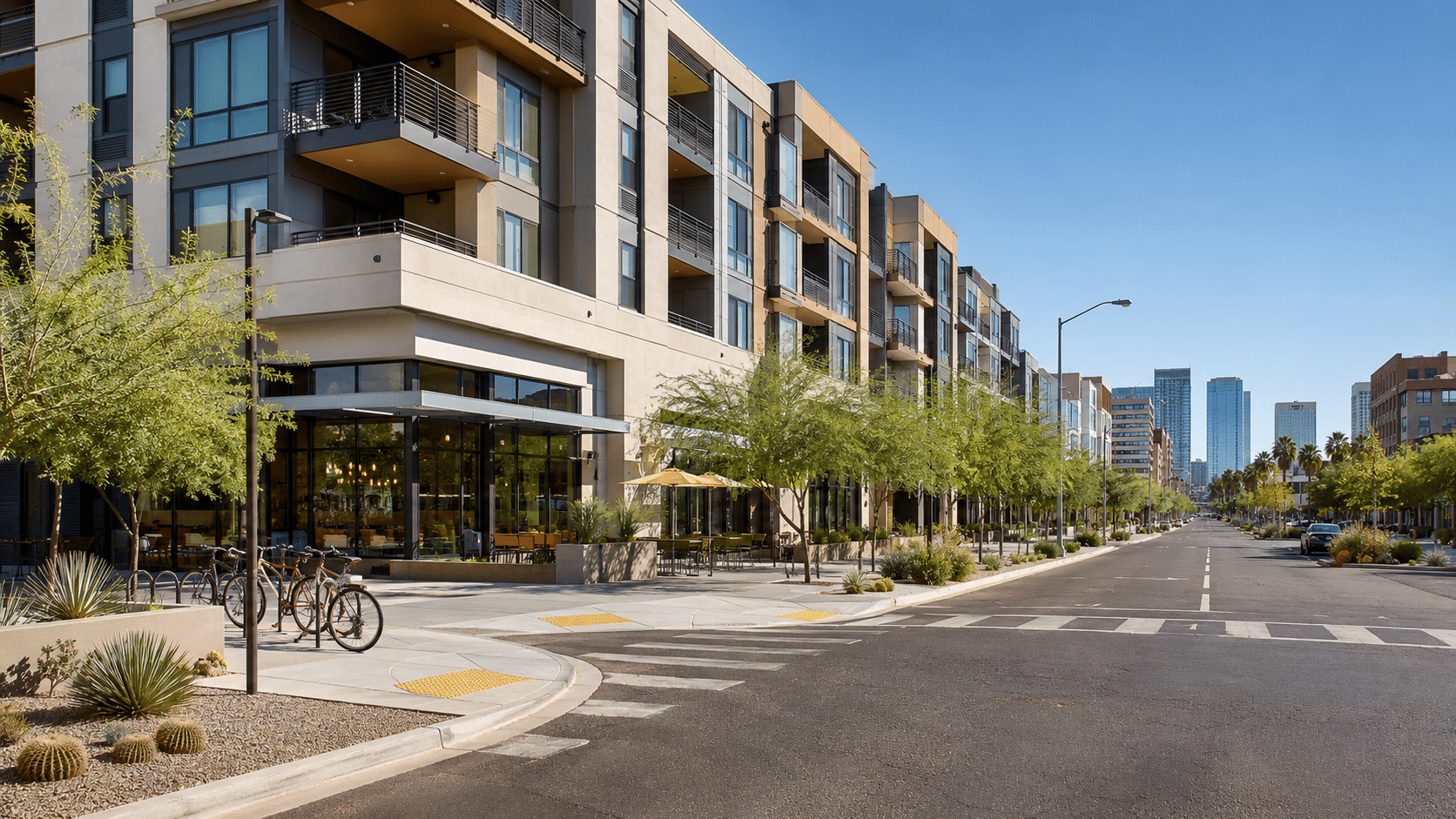
Central City Village real estate is the most distinctive submarket on the Phoenix map — the only one of the city’s 15 urban villages whose core is downtown Phoenix itself. Homes for sale in Central City span a spectrum no other Phoenix urban village can replicate: restored 1920s bungalows in historic districts, mid-rise and high-rise condominiums along Central Avenue, converted lofts in the Warehouse District, Tudor Revival and Spanish Colonial houses along tree-lined historic blocks, and townhomes walkable to Roosevelt Row and Heritage Square.
The City of Phoenix designed this Central City urban village as both the city’s government and employment center and the home of many of its oldest residential neighborhoods, giving Central City Phoenix homes for sale an unusual character — historic-district stewardship on one block, ground-floor retail and transit-oriented mixed use one block away. For buyers and sellers comparing Central City Village real estate against the broader Phoenix real estate market or evaluating the urban core versus suburban alternatives, downtown Phoenix delivers a residential experience the rest of the metro cannot match.
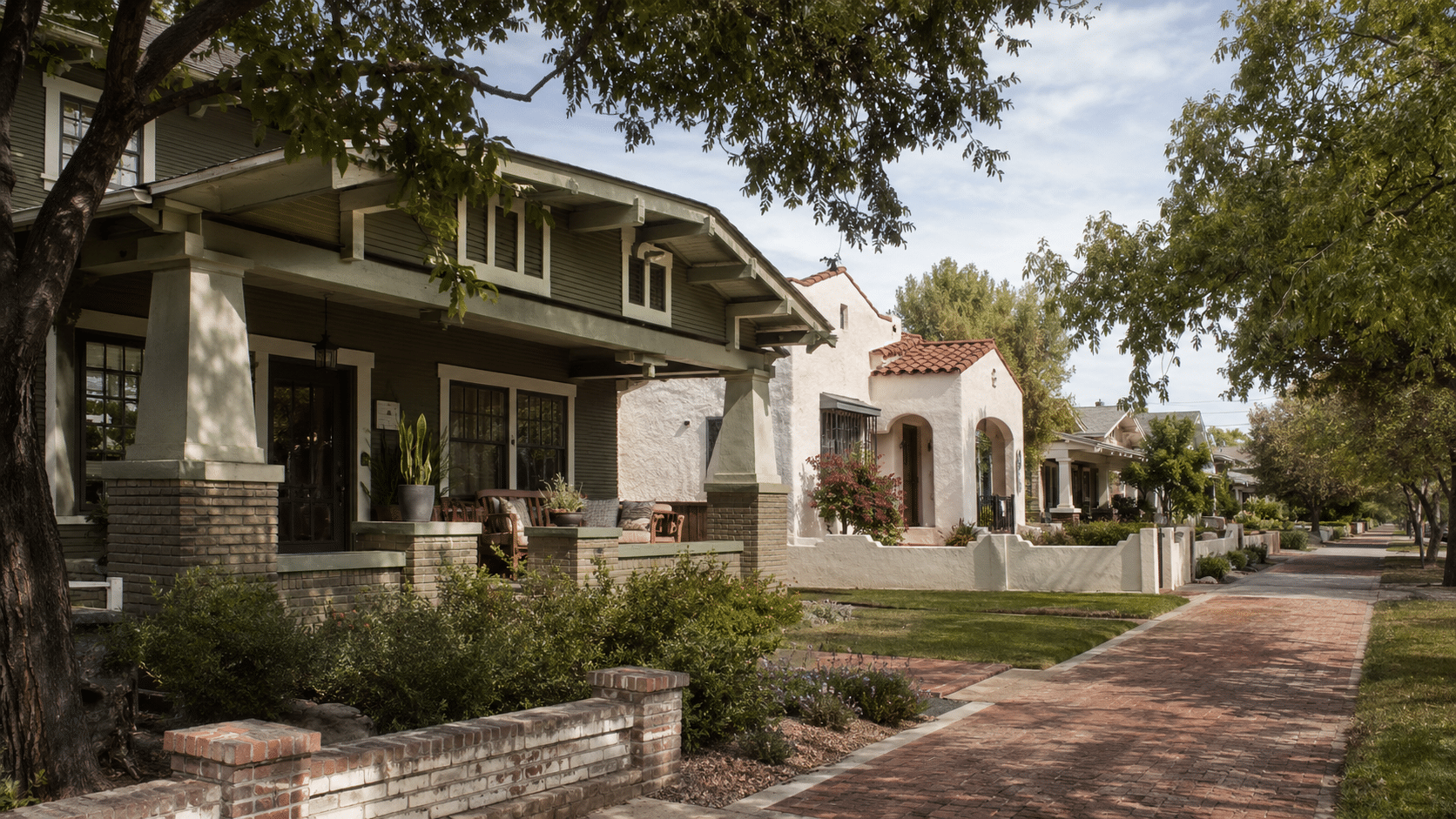
The Roosevelt Historic District along Roosevelt Street between Central and 7th Avenues is the village’s most-recognized historic enclave — a walkable cluster of restored bungalows, Pueblo Revival cottages, and Craftsman homes that anchor the broader Roosevelt Row Arts District. Most Roosevelt addresses sit on small lots and trade in the $500,000 to $900,000 range for restored single-family homes, with new infill projects pushing higher.
The F.Q. Story Historic District, west of 7th Avenue and bounded roughly by McDowell Road and Roosevelt Street, contains one of central Phoenix’s deepest concentrations of 1920s and 1930s bungalows. Buyers searching for Central City homes for sale with genuine prewar architecture consistently identify Story as the village’s most authentic district.
Garfield Historic District, east of 7th Street between Van Buren and McDowell, has emerged in the past decade as one of the most active preservation-renovation markets in the village. Original bungalows and Tudor Revivals sit alongside thoughtful infill at price points that remain below Roosevelt and Story.
Coronado Historic District, between 7th and 16th Streets north of McDowell, offers a more residential character with mature canopy trees, Spanish Colonial Revival homes, and walkability to neighborhood parks. Coronado is one of the most family-friendly addresses within Central City Village real estate.
East Alvarado, Evans Churchill, and Eastlake Park round out a historic district inventory that no other Phoenix urban village can match in density. Every transaction in these districts involves a preservation overlay review and zoning specifics that buyers and sellers should understand before drafting an offer.
The median sale price for Central City homes for sale currently sits near $365,000 — meaningfully below the broader Phoenix metro median of roughly $460,000 to $480,000 — and homes are averaging 62 days on market. Year-over-year, Central City Village real estate is down 9 percent in median sold price, a softer trend than the city overall and one driven primarily by the village’s heavy mix of condominium and loft inventory along the Central Avenue corridor, where rate-sensitive investor demand has cooled and downtown rental absorption has shifted. This is a market that rewards careful pricing and well-prepared listings — not a market where any address sells itself.
The housing stock spans an unusually wide range. Single-family historic homes in Roosevelt, Story, Garfield, and Coronado typically run from $400,000 for original-condition fixer-uppers to over $1.2 million for fully restored landmark properties. Mid-rise and high-rise condominiums along Central Avenue list anywhere from $200,000 for older buildings to over $1 million for new construction and penthouse units. Converted lofts in the Warehouse District south of the downtown core occupy a distinct niche, typically between $300,000 and $700,000 depending on square footage and building era. Restored 1920s and 1930s bungalows under 1,200 square feet trade differently than 1950s ranches above 2,000 square feet — pricing every Central City Phoenix home requires sub-neighborhood and property-type comparables, not city-wide averages.
The City of Phoenix planning record for Central City documents the village’s overlay districts and historic boundaries, and a current ARMLS pull combined with sub-district analysis is the foundation of any accurate list price — covered in the seller’s guide.
K-12 schools in Central City Village fall primarily within the Phoenix Elementary School District (PESD #1, also known as Phoenix Elementary), which operates 16 campuses serving roughly 5,000 students across the downtown core and surrounding historic districts. PESD includes Kenilworth Elementary, Emerson Elementary, and Garfield Elementary among the most-cited campuses for Central City buyers. High school students attend schools in the Phoenix Union High School District, including Central High School, North High School, and Bioscience High School — a small, specialized magnet program in downtown Phoenix.
What distinguishes Central City from every other Phoenix urban village is the concentration of higher-education campuses inside the village footprint. Arizona State University Downtown Phoenix campus spans more than a dozen buildings along Central Avenue and Taylor Street, housing the Walter Cronkite School of Journalism and Mass Communication, the Edson College of Nursing and Health Innovation, the College of Public Service and Community Solutions, and the Sandra Day O’Connor College of Law. The University of Arizona College of Medicine – Phoenix sits on the Phoenix Biomedical Campus just east of the ASU footprint, alongside other healthcare and research institutions.
This concentration of students, faculty, and researchers shapes daily demand patterns across homes in Central City — supporting rental absorption around campus-walkable addresses and creating a stream of relocation buyers each academic year that few other Phoenix submarkets see at similar scale.
Chase Field — home of the Arizona Diamondbacks — sits at the southeastern edge of the downtown core within Central City Village, and 81 home games per year shape the rhythm of the surrounding restaurant, bar, and short-term rental market. Two blocks west, Footprint Center hosts the Phoenix Suns and Phoenix Mercury along with a year-round concert calendar. The adjacent Phoenix Convention Center brings more than 250 conventions and trade shows annually, supporting the hotel and dining infrastructure that gives Central City homes for sale their distinctive urban-buyer appeal.
The Roosevelt Row Arts District along Roosevelt Street between Central and 7th Avenues anchors the village’s cultural scene with First Friday art walks, independent galleries, craft breweries, and chef-driven restaurants — a creative-economy ecosystem few American downtowns of this scale can match. Heritage Square at 6th and Monroe preserves the Rosson House Museum and a cluster of late-19th-century Victorian homes, anchoring the Children’s Museum of Phoenix and the Arizona Science Center on its perimeter.
Cultural infrastructure across the village runs deep. The Orpheum Theatre and Herberger Theater Center host performing arts; Margaret T. Hance Park, the Deck Park over the I-10 tunnel, provides 32 acres of urban green space; and Eastlake Park and Verde Park serve the residential neighborhoods east and northwest of the core. For buyers prioritizing walkability to a cultural ecosystem, no other Central City Village real estate alternative in Phoenix delivers comparable density.
Central City is the only Phoenix urban village where genuinely car-light or car-free living is practical, and that fact differentiates the village’s buyer base from every other established Phoenix submarket. Valley Metro Rail runs north-south along Central Avenue and east-west along Washington and Jefferson Streets, giving most Central City Village real estate addresses a station within a five to ten minute walk. The light rail connects directly north into Encanto Village and ultimately to Metrocenter, east to Tempe and Mesa, and south toward the airport.
Phoenix Sky Harbor International Airport sits roughly four miles southeast of the downtown core and is reachable in 10 to 15 minutes via the PHX Sky Train light-rail connector — a combination that gives homes in Central City the strongest airport proximity of any urban village. Interstate 10, Interstate 17, State Route 51, and Loop 202 all converge within or directly adjacent to the village, giving residents freeway access in any direction.
Walkability scores across the downtown core and the immediately surrounding historic districts consistently rank among the highest in Arizona. Phoenix’s Walkable Urban Code and Transit-Oriented Zoning Overlay districts continue to shape new development around the rail corridor, with new mid-rise apartments, mixed-use projects, and ground-floor retail prioritizing pedestrian access over parking ratios — a pattern that supports long-term Central City homes for sale value along the rail line.
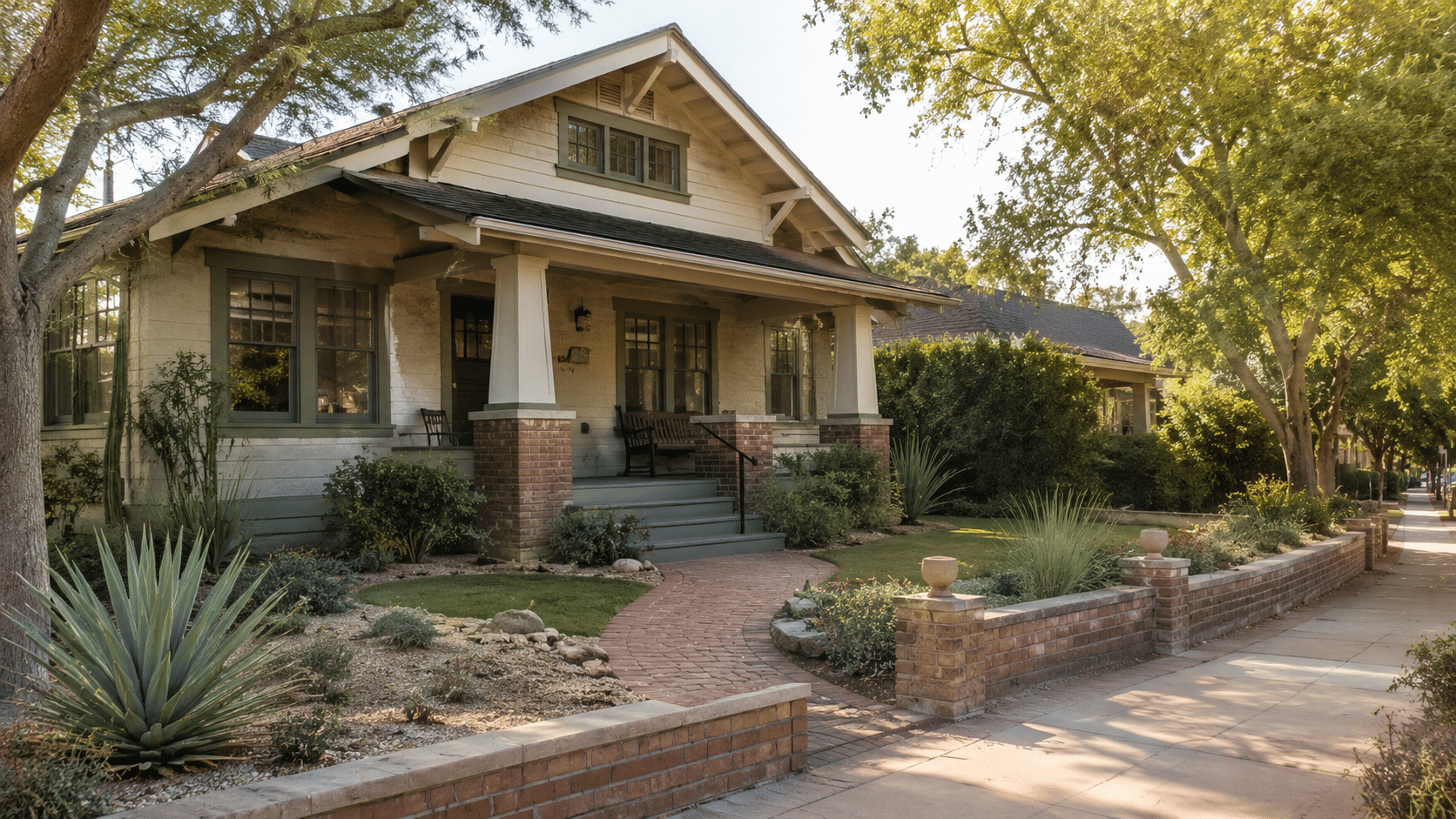
Central City Village real estate transactions in historic districts work differently than transactions elsewhere in Phoenix. Several layered zoning overlays govern what owners can and cannot do with their properties — and a buyer who closes without understanding which overlays apply to a specific address can lose months and tens of thousands of dollars on a planned renovation.
The Walkable Urban Code governs new construction and major modifications along the rail corridor and within the downtown core, prioritizing pedestrian-scale design, ground-floor activation, and height transitions adjacent to single-family historic blocks. The Downtown Code applies to the most-intensive downtown parcels. Outside the core, the Arts/Culture/Small Business Overlay preserves character along the Roosevelt Row corridor, while the Capitol Mall Overlay, the Roosevelt Neighborhood Special District, and the Story Neighborhood Conservation Plan govern preservation in their respective historic districts.
For Central City homes for sale within any designated historic district, exterior modifications, additions, and demolitions are typically subject to preservation overlay review. Buyers should confirm overlay status before drafting an offer that contemplates expansion or significant remodel, and should retain a contractor experienced with Phoenix historic preservation review. The buyer’s guide at West USA Realty covers pre-approval, offer structure, inspection priorities, and the specific diligence required for Central City and other Phoenix historic-district purchases.

The Central City Village real estate market is the softest of any urban village in central Phoenix at this moment, with the median sold price down 9 percent year-over-year and average days on market sitting above the city-wide pace. This is not a distress signal — it is a rebalancing in a submarket carrying heavy condo and loft inventory where investor demand has cooled with elevated mortgage rates and short-term rental yields have softened. The structural fundamentals that drive long-term Central City demand — Sky Harbor proximity, light-rail access, ASU and medical campuses, historic-district inventory — remain intact.
For buyers, the current Central City homes for sale environment is the most negotiation-friendly the village has seen in five years. Single-family historic homes in Roosevelt and Coronado that previously attracted multiple offers within a week now routinely sit 60 to 90 days on market, giving prepared buyers room to negotiate price, concessions, and contingency terms. Buyers comparing Central City to outer-ring single-family options should also weigh South Mountain Village and similar alternatives — the buyer’s guide covers offer structure for soft-market conditions.
For sellers, price reductions are running roughly 60 percent of all Central City listings — meaning the most common and most costly mistake in this market is anchoring to peak-era pricing. An accurate list price built from a current ARMLS pull and comparative market analysis at the sub-district level outperforms aggressive pricing followed by reductions in nearly every case. Seller concessions in the form of rate buydowns are particularly effective in the village’s condo segment, where rate-sensitive buyers dominate. The seller’s guide covers pricing strategy and negotiation tactics for Central City sellers.
Central City Village is the only Phoenix urban village where downtown, historic districts, light rail, and the airport all converge in one walkable footprint — a combination that makes the village both the metro’s most distinctive submarket and one of its most demanding to navigate. The village rewards buyers who understand which historic district and which property type best fit their priorities, and it rewards sellers who price from sub-district comparables in current market conditions rather than peak-era estimates.
Carl Chapman, REALTOR® with West USA Realty, brings more than four decades of greater Maricopa County experience to every Central City Village real estate transaction — from downtown condo and loft closings to restored historic single-family listings in Roosevelt, F.Q. Story, Coronado, and Garfield. Whether you are exploring buying a home in Central City, selling your Central City home, or simply comparing Central City homes for sale to other Phoenix urban villages under current market conditions, the next step is a direct conversation. Reach Carl at (602) 617-4440 or chapman@westusa.com to begin.
Central City Village is the urban village that contains downtown Phoenix itself, making it the only one of the 15 official Phoenix urban villages whose core is the citywide downtown. The village stretches roughly from McDowell Road south to the Salt River, and from Interstate 17 east to State Route 51. It encompasses the downtown business district, the Capitol Mall area, the Warehouse District, and many of Phoenix’s oldest residential neighborhoods including the Roosevelt Historic District, F.Q. Story Historic District, Garfield Historic District, Coronado Historic District, East Alvarado, Evans Churchill, and Eastlake Park.
Central City Village contains downtown Phoenix but is larger than the downtown core itself. The village is one of the City of Phoenix’s 15 official planning subdivisions and stretches well beyond the high-rise district to include the surrounding historic residential neighborhoods, the Warehouse District, and the Capitol Mall area. When real estate listings refer to “downtown Phoenix homes for sale,” they typically mean the high-rise and mid-rise inventory along Central Avenue between Roosevelt and Jefferson — a small subset of all Central City Village real estate. Distinguishing the two matters for accurate price comparisons and HOA diligence.
The median sale price for Central City homes for sale currently sits near $365,000, with year-over-year prices down roughly 9 percent and average days on market near 62 — meaningfully softer than the broader Phoenix metro. The price range is unusually wide for a single urban village. Condominiums along the Central Avenue corridor start under $250,000 for older buildings and reach above $1 million for new construction and penthouses. Single-family historic homes in Roosevelt, F.Q. Story, Coronado, and Garfield typically run from $400,000 for fixer-uppers to over $1.2 million for fully restored landmark properties. Pricing every Central City Phoenix home requires sub-district comparables, not city-wide averages.
A historic district overlay is a zoning layer that governs exterior modifications, additions, and demolitions within a designated historic district. Several Central City districts including Coronado Historic District, F.Q. Story, Roosevelt, and Garfield carry preservation overlays that require review for changes affecting the streetscape — typically front facades, roof pitches, original windows, and significant additions. Interior changes are generally not regulated. The review adds time to renovation plans but it also protects long-term values in the historic districts and is one of the reasons Central City homes in these neighborhoods have held character that suburban Phoenix cannot replicate. Confirm overlay status with the City of Phoenix Planning and Development Department before drafting an offer.
Central City is the most walkable urban village in Phoenix, with the downtown core and the immediately surrounding historic districts consistently ranking among the highest walk scores in Arizona. Most addresses within the village footprint sit within a five to ten minute walk of a Valley Metro Rail station along Central Avenue or Washington and Jefferson Streets. Phoenix Sky Harbor International Airport is roughly four miles southeast of the downtown core, reachable in 10 to 15 minutes by car or via the PHX Sky Train light-rail connector. This combination of walkability, rail access, and airport proximity is the strongest in any Phoenix urban village.
Condo purchases in Central City Village require additional diligence beyond a typical single-family transaction. Conventional loans backed by Fannie Mae and Freddie Mac require the building to be on an approved condo project list — buyers should confirm warrantability before drafting an offer. FHA loans accept some Central City buildings that maintain FHA project approval and may require as little as 3.5 percent down for qualifying buyers. VA loans accept VA-approved buildings. Loft buildings and older mid-rise projects sometimes have HOA reserve, owner-occupancy ratio, or commercial-space issues that disqualify them from conventional financing — meaning buyers may need portfolio or non-QM products for those specific buildings. A licensed Arizona lender experienced with downtown Phoenix condo financing should review the specific building before any offer.
We use cookies to improve your experience on our site. By using our site, you consent to cookies.
Manage your cookie preferences below:
Essential cookies enable basic functions and are necessary for the proper function of the website.
CloudFlare provides web performance and security solutions, enhancing site speed and protecting against threats.
Service URL: developers.cloudflare.com (opens in a new window)
Google Tag Manager simplifies the management of marketing tags on your website without code changes.
These cookies are used for managing login functionality on this website.
Statistics cookies collect information anonymously. This information helps us understand how visitors use our website.
Google Analytics is a powerful tool that tracks and analyzes website traffic for informed marketing decisions.
Service URL: policies.google.com (opens in a new window)
You can find more information about our Cookie Policy and Privacy Policy.