
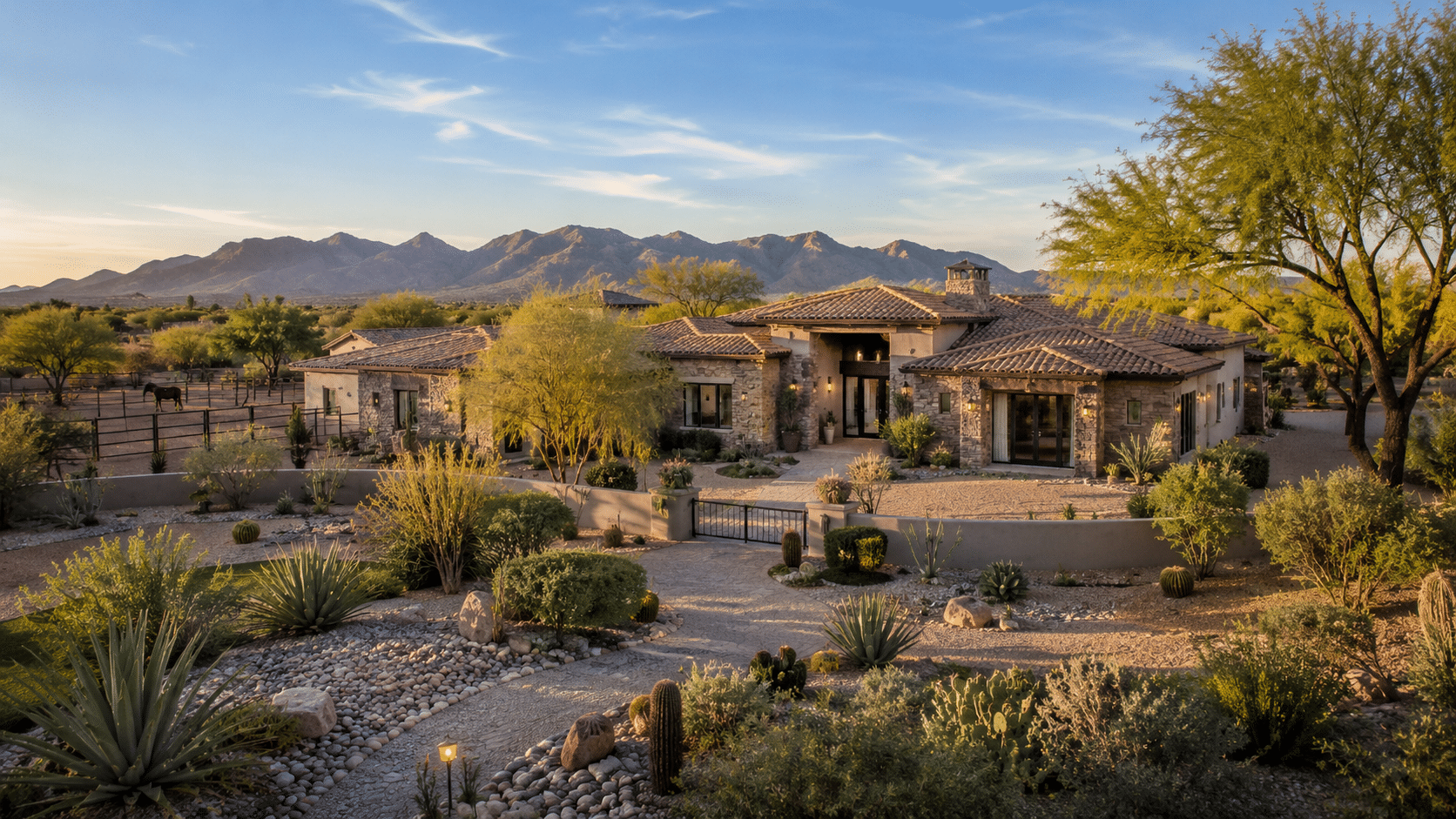
Cactus Corridor stands as one of Scottsdale’s most coveted residential corridors — an established stretch of north Scottsdale that has long attracted discerning buyers seeking the rare combination of wide desert lots, equestrian-friendly zoning, and effortless proximity to everything the Valley of the Sun has to offer. The corridor takes its name from Cactus Road, the east–west spine that runs through the heart of the area, with the community generally bounded by Scottsdale Road to the west, Pima Road to the east, Bell Road to the north, and Shea Boulevard to the south — placing it squarely within one of the most desirable quadrants in all of Maricopa County.
Development here accelerated through the 1980s and 1990s as Scottsdale’s northern expansion pushed custom builders and established master planners into this sun-drenched terrain. Today the corridor encompasses a mix of large custom lots, gated enclaves, and thoughtfully designed subdivisions that together hold several thousand homes. As an Associate Broker with West USA Realty, I’ve had the privilege of helping countless families and individuals find their ideal property in Cactus Corridor, and what strikes every buyer — whether they’re relocating from out of state or moving up within the Valley — is how authentically Scottsdale this neighborhood feels: open-sky views, Sonoran Desert landscaping, and a pace of life that manages to be both sophisticated and unhurried.
The lifestyle promise here is real: equestrian trails, world-class golf, top-ranked Scottsdale schools, and a short drive to virtually everything the metropolitan Phoenix area offers.
Cactus Corridor is distinguished by the diversity of its residential product, ranging from sprawling custom estates on acre-plus lots to well-appointed single-family homes in gated communities, with a sprinkling of townhome and villa offerings that appeal to lock-and-leave buyers.
Toll Brothers has maintained a notable presence in the greater north Scottsdale corridor, delivering their signature luxury single-family homes with elevated architectural standards, generous square footages, and upscale interior packages that attract move-up and luxury buyers. Their enclaves within and adjacent to the Cactus Corridor favor stucco-and-stone construction with three-car garages and resort-style backyards as standard expectations.
Shea Homes built extensively throughout north Scottsdale during the corridor’s formative decades, and their legacy subdivisions — characterized by mature desert landscaping, established HOA governance, and proven floor plans — remain among the most sought-after resale opportunities in the area. Shea’s attention to community design gave many Cactus Corridor neighborhoods their distinctive streetscapes.
Pulte Homes contributed several thoughtfully planned subdivisions that prioritize family livability — open-concept floor plans, community pool amenities, and cul-de-sac lot configurations that keep neighborhoods feeling intimate despite their scale. Pulte communities within the corridor tend to offer excellent value relative to newer construction further north.
Custom builders have also shaped the corridor’s character significantly. Large infill lots and re-subdivided parcels continue to attract architect-designed custom estates, particularly in the area’s horse property sections where parcels of one to four acres allow for private paddocks, arenas, and guest casitas alongside the main residence.
Named enclaves and subdivisions woven through the corridor include Cactus Corridor Estates, Scottsdale Shadows, McCormick Ranch (whose eastern reaches touch the corridor), Gainey Ranch (to the south), and various smaller gated communities along the Cactus Road frontage. The housing mix spans single-family detached homes, custom estates, and low-density townhomes, giving buyers at multiple price points a genuine foothold in this prestigious address.
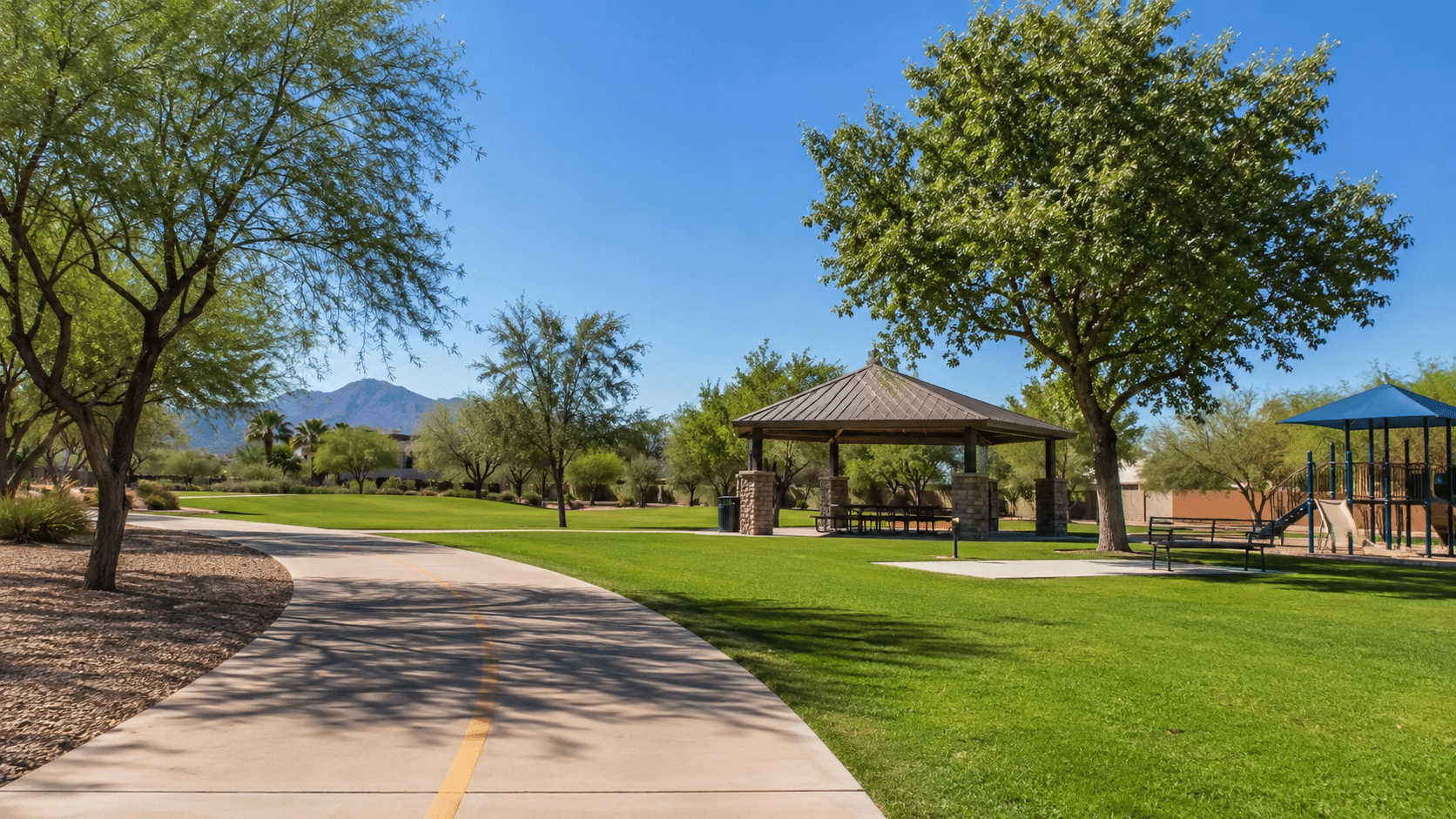
Cactus Corridor residents enjoy a recreation landscape that rivals anything in the Phoenix metropolitan area, with golf, desert preserves, and park amenities all within close reach.
The corridor sits within easy reach of some of Scottsdale’s finest fairways. Gainey Ranch Golf Club, designed with three distinct nine-hole loops — Dunes, Lakes, and Arroyo — weaves through the Gainey Ranch master-planned community just south of the corridor and offers semi-private play for residents in surrounding neighborhoods. To the north, Troon North Golf Club features two championship courses — the Monument Course and the Pinnacle Course, both designed by Tom Weiskopf and Jay Morrish — widely regarded among the finest desert golf experiences in the Southwest. The TPC Scottsdale, home of the Waste Management Phoenix Open, lies within a 15-minute drive, and Kierland Golf Club, a Jerry Pate design, provides additional options for avid golfers calling the corridor home.
Indian Bend Wash Greenbelt, Scottsdale’s celebrated linear park system, runs north–south through the corridor’s western edge, offering miles of paved multi-use paths, ramadas, sports fields, and multiple lakes popular with kayakers, pedal boaters, and weekend walkers. Chaparral Park and Cactus Park provide additional turf fields, tennis and pickleball courts, playgrounds, and ramada facilities well-suited to active families.
The McDowell Sonoran Preserve — one of the largest urban preserves in the United States — is accessible within minutes of the corridor. Its trail network offers everything from accessible nature walks to demanding summit challenges. Top trails include:
The McDowell Mountain Regional Park, operated by Maricopa County, adds equestrian-specific trails and mountain bike routes a short drive to the northeast.

Cactus Corridor occupies an enviable position at the intersection of north Scottsdale’s premier retail and dining destinations. Within minutes of virtually any address in the corridor, residents have access to a density of shopping, restaurant, and entertainment options that would be the envy of most American suburbs.
Kierland Commons, positioned at Scottsdale Road and Greenway Parkway just west of the corridor, functions as a modern town center for north Scottsdale — an open-air lifestyle center anchored by Pottery Barn, Williams-Sonoma, Restoration Hardware, and Free People, with a restaurant row that includes Fleming’s Prime Steakhouse & Wine Bar, North Italia, and Zinburger Wine & Burger Bar. Directly across the street, Scottsdale Quarter doubles down on the upscale retail experience with Anthropologie, Apple, lululemon, and a cinema alongside restaurants including Ocean 44 and Culinary Dropout.
Scottsdale Fashion Square, the largest shopping mall in Arizona, lies roughly ten minutes south of the corridor and anchors the broader Scottsdale retail universe with Neiman Marcus, Nordstrom, Macy’s, and hundreds of specialty retailers. Old Town Scottsdale’s restaurant and arts district — featuring venues like Citizen Public House, FnB Restaurant, and the galleries of the Scottsdale Arts District — provides a cultural and culinary destination that corridor residents claim as their own backyard.
Day-to-day retail needs are served by multiple Fry’s Food Stores, Safeway, Whole Foods Market, and Trader Joe’s locations within easy reach. The Scottsdale 101 Power Center on the Loop 101 at Pima Road aggregates big-box retail including Costco, Target, and Best Buy, handling household staples with minimal driving.
HonorHealth Scottsdale Shea Medical Center, located on Shea Boulevard just minutes from the corridor’s southern boundary, is one of the Valley’s most comprehensive acute-care hospitals, offering Level II Trauma services, cardiac care, cancer treatment, and a nationally recognized orthopedic program. Mayo Clinic’s Phoenix/Scottsdale campus on Shea Boulevard adds world-class specialty medicine within a ten-minute drive — a significant draw for health-conscious buyers evaluating north Scottsdale communities.
The Loop 101 (Pima Freeway) runs along the corridor’s western edge and provides the primary highway spine connecting residents to the broader Valley in minutes. Scottsdale Road and Pima Road serve as the dominant north–south surface arterials, with Cactus Road, Bell Road, and Shea Boulevard handling east–west traffic flow efficiently. Sky Harbor International Airport lies approximately 20–25 minutes south via the Loop 101, a commute that consistently ranks among the more convenient airport-access times of any north Scottsdale neighborhood. Downtown Phoenix is reachable in 25–30 minutes under normal traffic conditions, and the broader East Valley is accessible via the Loop 202 (Red Mountain Freeway) interchange a short drive south.
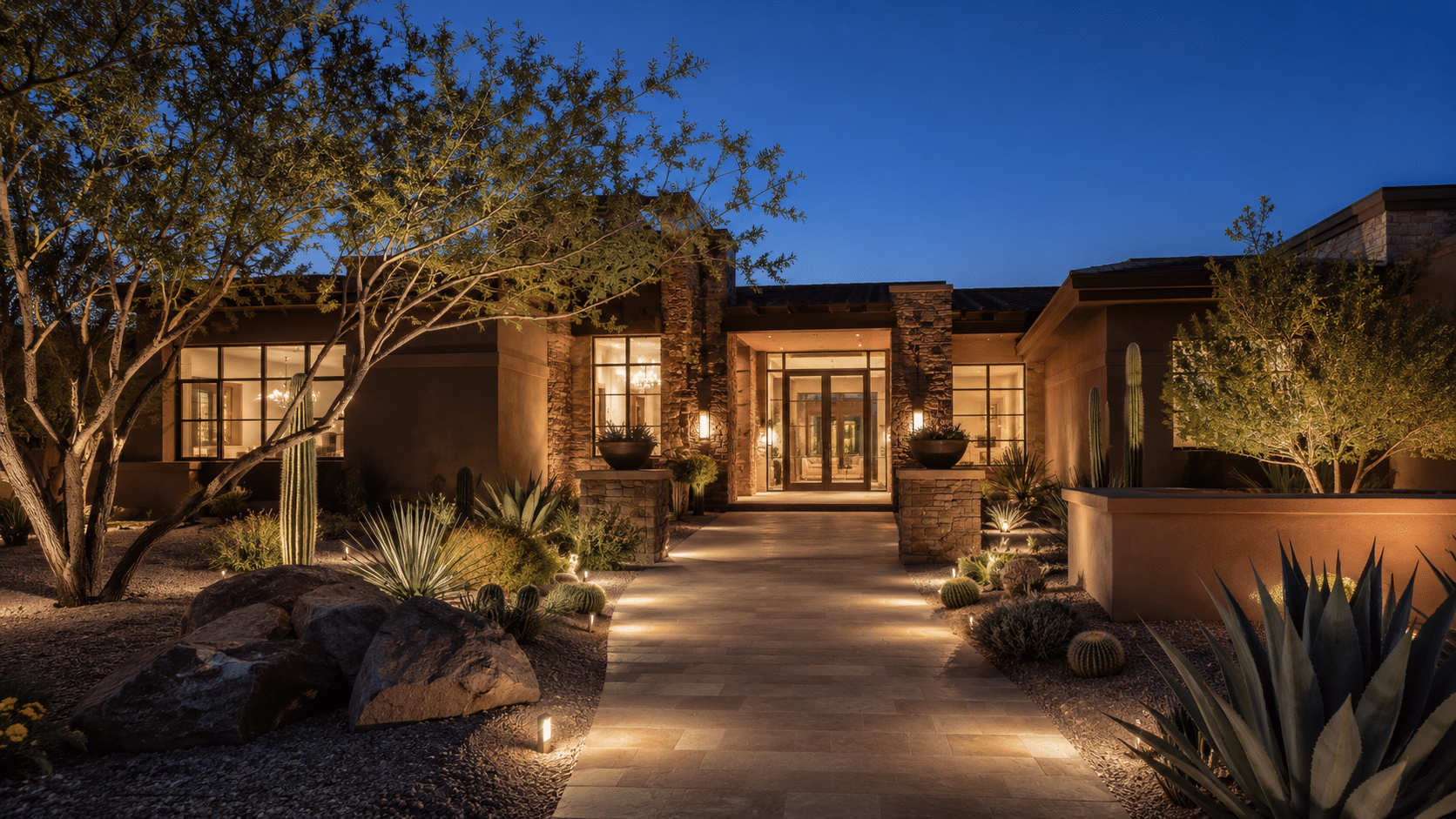
Cactus Corridor represents a very specific kind of value proposition: the prestige and amenity richness of north Scottsdale at a price point that — relative to newer luxury developments further north — still offers meaningful room for appreciation. Whether you are drawn by the equestrian lifestyle, the top-tier Scottsdale Unified schools, the incomparable golf and preserve access, or simply the enduring cachet of a Scottsdale address, the corridor delivers on every count.
Cactus Corridor homes for sale range from approachable entry-level family homes to seven-figure custom estates, which means the neighborhood welcomes a genuinely broad range of buyers. As an Associate Broker with West USA Realty, I bring decades of experience in this specific market — I know the streets, the builders’ reputations, the school boundaries, and the micro-level lot quality differences that turn a good purchase into an exceptional one. My commitment to every client is the same: thorough representation, honest counsel, and the local knowledge that only comes from years of working this corridor.
Ready to discover your perfect Cactus Corridor home? Contact Carl Chapman at (602) 617-4440.

Cactus Corridor homes for sale span a wide spectrum of product types, reflecting the corridor’s decades-long development arc. Single-family detached homes represent the dominant inventory mix, ranging from approximately $650,000 for more modestly sized resale properties to well above $2,000,000 for custom estates on larger lots, with price-per-square-foot figures typically falling between $275 and $475 depending on lot size, finishes, and recency of renovation. Horse properties and custom-build parcels command premium pricing per square foot given their scarcity. Average days on market in the corridor’s resale tier have historically trended below the broader Scottsdale average, reflecting sustained buyer demand. Appreciation trends in this portion of Maricopa County have been consistent with broader north Scottsdale’s long-term value growth, supported by land scarcity and the area’s enduring lifestyle appeal.

Residents of Cactus Corridor enjoy access to a layered amenity ecosystem that spans public parks, private clubs, and the open desert. The Indian Bend Wash Greenbelt provides miles of paved multi-use paths popular for cycling, jogging, and casual strolls year-round. Cactus Park and Chaparral Park offer tennis and pickleball courts, lighted athletic fields, playgrounds, and reservable ramadas. Gainey Ranch Golf Club and Kierland Golf Club anchor the corridor’s golf access at the semi-private level, while the broader north Scottsdale corridor places a dozen additional courses within a fifteen-minute drive. Community pools are standard within most HOA-governed subdivisions, and many custom estates feature private pool and spa installations as a baseline expectation in the local market.

No north Scottsdale corridor is better positioned relative to premier retail and dining than Cactus Corridor. Kierland Commons and Scottsdale Quarter together form the Valley’s most celebrated open-air retail district, offering everything from luxury home furnishings to acclaimed restaurants within a five-minute drive of most corridor addresses. Scottsdale Fashion Square extends the retail universe to include luxury department store anchors and hundreds of specialty shops. Independent dining highlights include FnB Restaurant in Old Town, Citizen Public House on Scottsdale Road, and an ever-deepening roster of chef-driven concepts along the North Scottsdale dining corridor. The Scottsdale Center for the Performing Arts and the Scottsdale Museum of Contemporary Art provide cultural programming year-round.

The Loop 101 (Pima Freeway) defines the corridor’s western accessibility boundary and connects residents efficiently to the entire metropolitan freeway network. Scottsdale Road and Pima Road offer reliable north–south surface-street alternatives for shorter-range errands and cross-corridor movement. Sky Harbor International Airport is reachable in approximately 20–25 minutes via the Loop 101 southbound — one of the shortest airport-access commutes of any luxury north Scottsdale address. Downtown Phoenix lies 25–30 minutes away under typical conditions. Valley Metro bus service operates along Scottsdale Road and connecting arterials, and the broader Valley light rail network is accessible from downtown Scottsdale transit hubs. Dedicated bike lanes along portions of the Indian Bend Greenbelt and select arterials support cycling commutes for fitness-oriented residents.

HonorHealth Scottsdale Shea Medical Center on Shea Boulevard serves as the corridor’s primary acute-care anchor, offering 24/7 emergency services, Level II Trauma designation, cardiac catheterization, and a nationally recognized joint replacement and orthopedic surgery program. The nearby Mayo Clinic Arizona campus on Shea Boulevard provides world-class specialty and subspecialty medicine across oncology, cardiology, neurology, and dozens of additional disciplines — a resource available to corridor residents within a ten-minute drive. Multiple urgent care clinics, including NextCare Urgent Care and Banner Urgent Care locations along Scottsdale Road and Shea Boulevard, handle non-emergency needs efficiently. The density of specialty medical offices throughout the north Scottsdale medical corridor ensures that corridor residents face minimal travel burdens for routine specialist visits.

The McDowell Sonoran Preserve is the corridor’s defining outdoor amenity — a 36,000-acre expanse of protected Sonoran Desert immediately accessible to the northeast. Its 225+ miles of multi-use trail accommodate hikers, mountain bikers, and equestrians, with named trails like Tom’s Thumb, Windgate Pass, and the Gateway Loop drawing enthusiasts from across the Valley. The Indian Bend Wash Greenbelt provides a more accessible year-round pathway network for daily exercise and family recreation. Scottsdale’s equestrian heritage is particularly well-preserved in the Cactus Corridor, where horse property lots with direct trail access remain available and are actively maintained by a community that values the lifestyle. Organized youth and adult sports leagues operate through Scottsdale’s park system, and the dry desert climate — with over 300 days of sunshine annually — ensures that the outdoor calendar extends well beyond the traditional warm-weather window.

Cactus Corridor residents participate in one of Scottsdale’s most vibrant community calendars. The annual Waste Management Phoenix Open at TPC Scottsdale draws hundreds of thousands of visitors each February and is a cultural fixture for north Scottsdale residents. The Scottsdale Arabian Horse Show, held at WestWorld of Scottsdale each February — just minutes from the corridor — is the world’s largest Arabian horse show and a particularly fitting event for a neighborhood with deep equestrian roots. The Scottsdale Arts Festival each March, Old Town’s ArtWalk every Thursday evening, and various Kierland Commons seasonal events fill the year-round social calendar. HOA-organized block parties, neighborhood socials, and park-based community gatherings reinforce a strong sense of belonging across the corridor’s diverse mix of longtime residents and new arrivals.

North Scottsdale enjoys the Valley of the Sun’s signature climate — approximately 300 days of sunshine per year, with warm winters that average daytime highs in the mid-60s°F and summers that peak in the 105–110°F range during July and August. Annual rainfall averages roughly 8 inches, with a pronounced monsoon season from late June through September delivering dramatic afternoon thunderstorms that briefly cool the desert and restore its color. The Cactus Corridor’s elevation — approximately 1,200 to 1,500 feet above sea level — places it slightly higher than the Phoenix core, which can translate to marginally cooler summer evenings and enhanced mountain views. Desert landscaping standards enforced by corridor HOAs support passive cooling through strategic shade plantings and heat-reflective hardscapes, making outdoor living genuinely comfortable for eight to nine months of the year.
Properties within Cactus Corridor fall under City of Scottsdale zoning jurisdiction, with RE-43, R-3, and various planned-unit-development designations governing lot coverage, setbacks, and accessory structure allowances depending on the specific subdivision. HOA architectural review committees enforce design guidelines that maintain the corridor’s aesthetic consistency — typically requiring approval for exterior color changes, additions, and landscape modifications. Building codes adhere to the International Building Code as adopted by Scottsdale, with Arizona-specific amendments for seismic, wind, and energy-efficiency standards. The corridor’s position within the Salt River watershed means some lots carry flood zone designations; buyers are advised to confirm FEMA flood map status for specific parcels. Scottsdale’s Green Building Program incentivizes energy-efficient construction and renovation, and many newer and renovated corridor homes incorporate solar arrays, foam insulation, and high-efficiency HVAC systems.

Cactus Corridor residents benefit from north Scottsdale’s position at the heart of one of Arizona’s most dynamic employment corridors. GoDaddy, headquartered near the Scottsdale/Tempe border, employs thousands in the region. Vanguard’s large Phoenix-area campus draws financial services professionals to north Scottsdale. The SkySong ASU Scottsdale Innovation Center near Scottsdale Road and McDowell provides a technology and entrepreneurship hub that has attracted dozens of high-growth companies and startups. Mayo Clinic Arizona employs thousands of medical and administrative professionals at its Shea Boulevard campus. The broader Scottsdale/Tempe/Chandler technology and financial services corridor — including major employers like Nationwide Insurance, Charles Schwab (Westlake, TX HQ but large local operations), and PayPal — places numerous Fortune 500 employment centers within a 20–30-minute commute of the corridor. Healthcare, tourism, hospitality, and real estate together round out the local economic base.

Property taxes in Cactus Corridor reflect Maricopa County’s relatively competitive rate, typically falling in the range of 1.0–1.3% of assessed value annually — though Scottsdale’s Limited Cash Value assessment methodology often results in effective tax rates below full market value for established properties. HOA fees vary significantly by subdivision: gated enclaves with extensive common-area amenities may run $300–$600 per month, while lower-density custom home neighborhoods with minimal shared infrastructure may assess as little as $50–$150 monthly. Utility costs reflect the Arizona desert context: summer electric bills for homes with standard HVAC systems range from $200–$500 per month depending on home size and insulation quality, while winter utility expenses are notably modest. Overall, Cactus Corridor’s cost of living tracks closely with broader north Scottsdale — premium to the Phoenix metro average but frequently cited by buyers as excellent value relative to comparable coastal luxury markets.

Cactus Corridor falls entirely within the City of Scottsdale, which consistently earns recognition as one of the best-managed municipalities in the United States. Scottsdale’s public works department maintains the corridor’s arterial road infrastructure, while Republic Services handles residential trash and recycling collection under contract. The city’s Water Resources Department manages the water supply through a blend of Colorado River water, Salt River Project allocations, and groundwater, with reliability standards that exceed state requirements. Corridor residents are served by the Scottsdale City Council through the at-large electoral system, and the Scottsdale Planning Commission provides the regulatory oversight that has helped maintain the corridor’s zoning integrity over decades of growth. HOA governance adds a private layer of CC&R enforcement that, in most corridor subdivisions, operates cooperatively with city planning goals to preserve property values and neighborhood character.
We use cookies to improve your experience on our site. By using our site, you consent to cookies.
Manage your cookie preferences below:
Essential cookies enable basic functions and are necessary for the proper function of the website.
CloudFlare provides web performance and security solutions, enhancing site speed and protecting against threats.
Service URL: developers.cloudflare.com (opens in a new window)
Google Tag Manager simplifies the management of marketing tags on your website without code changes.
These cookies are used for managing login functionality on this website.
Statistics cookies collect information anonymously. This information helps us understand how visitors use our website.
Google Analytics is a powerful tool that tracks and analyzes website traffic for informed marketing decisions.
Service URL: policies.google.com (opens in a new window)
You can find more information about our Cookie Policy and Privacy Policy.