

On New Year’s Day 1960, Del Webb opened the gates to a community no one had ever built before. The crowd was so large that traffic on Grand Avenue backed up for miles. Five model homes had been staged on a stretch of cotton fields northwest of Phoenix. Webb’s team expected ten thousand visitors over opening weekend. They drew closer to one hundred thousand. The retirement community as we know it was born that weekend, and Sun City Arizona has been refining the model ever since.
Sixty-six years later, the community still anchors the West Valley. Approximately 26,000 single-family homes sit on land that was once farmland, arranged along the gently curving and circular streets that became Webb’s architectural signature. Recreation Centers of Sun City operates seven facilities serving residents. Banner Boswell Medical Center, embedded in the heart of the community, has grown into a regional acute care hospital. The original golf courses have been joined by additional layouts, and a generation of residents who arrived as snowbirds in their fifties have raised the median age and the depth of community institutions.
What makes Sun City worth understanding in 2026 is not just its history. It is the way the community continues to function as a real, working town for adults over 55 — a place with its own civic patrol, its own library, its own museum, its own newspaper, and a resale-only housing market that keeps prices accessible compared to newer master-planned competitors. For buyers comparing 55+ options across metro Phoenix, Sun City sets the baseline.

Sun City reads differently than newer 55+ communities, and the difference is mostly about depth. The activity ecosystem here was not designed by a marketing team — it grew, organically, as residents started clubs and associations decade after decade. The result is a calendar that runs into the hundreds of weekly activities, governed by resident-led boards rather than corporate amenity managers.
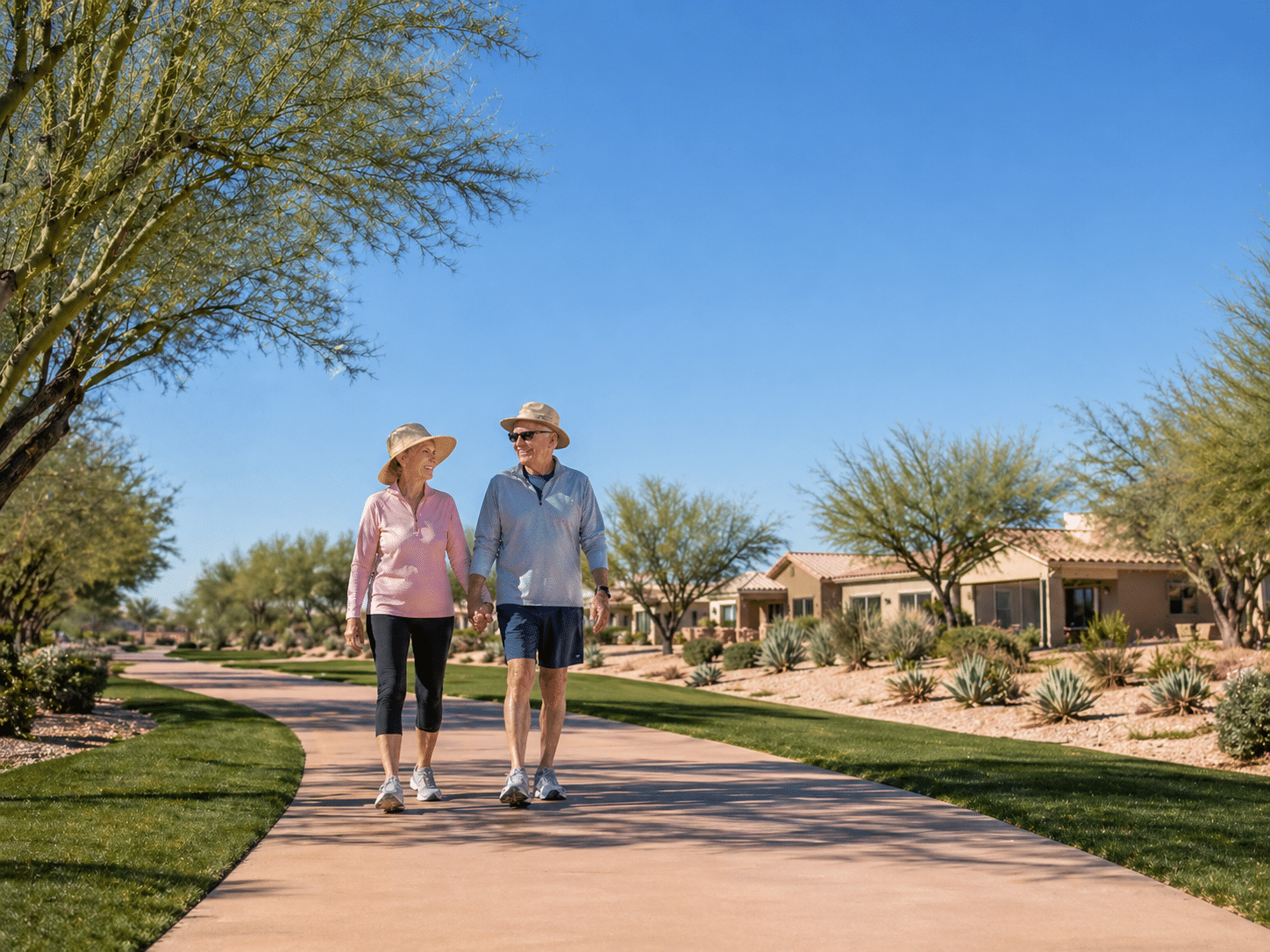
Mornings tend to start early, especially from October through April when the West Valley sky stays comfortable until late morning. Walking groups assemble in the parking lots of Lakeview Recreation Center and Bell Recreation Center before the temperature climbs. Fitness classes begin around the same time. By midmorning, the pickleball courts at Marinette and Mountain View are full, and golf carts move along Del Webb Boulevard with the predictable rhythm of a town built around them.
The afternoons slow down somewhat in summer and pick up again as winter visitors arrive. By Thanksgiving, the community is at full capacity. Concerts at Sun Bowl, the outdoor amphitheater near Lakeview, fill the evenings with regional acts and resident-led performances. The Sun City Library — operated as a community library, not a branch of the Maricopa County Library District — runs full programming. Sun City Posse, the volunteer citizen patrol founded in 1973, continues to serve as a model for similar programs across the country.
The 55+ age restriction is enforced under the federal Housing for Older Persons Act, which means the demographic mix tends toward retirees and pre-retirees rather than the multigenerational character of typical Maricopa County neighborhoods. That demographic concentration is what makes the depth of programming possible.

Recreation Centers of Sun City operates seven recreation centers across the community. Each has its own personality and its own concentration of activities. The seven facilities — Bell, Fairway, Lakeview, Marinette, Mountain View, Oakmont, and Sundial — collectively give residents access to amenities that newer communities advertise as exclusive features. Most Sun City buyers eventually settle into routines that touch two or three of the centers regularly. The geographic spread of the seven centers across the community means most residents live within a short golf cart drive of a primary facility, and many Sun City buyers report that their choice of neighborhood was influenced as much by proximity to a favored rec center as by lot size or floor plan.
Bell Recreation Center, the largest and most central of the seven, houses an indoor walking track, a 30,000-square-foot fitness center, multiple pools, and the most extensive arts and crafts studios in the system. Lakeview sits beside the manmade lake of the same name and offers waterfront walking and one of the more popular pool complexes. Sundial leans heavily into pickleball and tennis. Marinette is known among regulars for its quieter character. Mountain View, Oakmont, and Fairway round out the system with their own combinations of pools, courts, fitness rooms, and meeting spaces.
Golf is woven into the fabric of the community in a way that newer 55+ developments rarely match. Multiple courses operated by RCSC are available to residents under the recreation membership, and additional daily-fee and private courses sit within or adjacent to the community. The combination of executive courses, championship layouts, and walking-friendly par-3 options means residents can match the day’s energy to the format of play available. Tee times move quickly during winter season; midweek summer rounds are easy to grab. For new arrivals, RCSC golf operations run clinics and orientation rounds that help residents learn the courses and find regular playing groups.
The studios and classrooms at Sun City rec centers are where the community’s depth shows most clearly. Pottery kilns, woodshops, lapidary shops, sewing studios, painting rooms, photography labs, and computer rooms operate on schedules that change with the season. Resident instructors, many of them retired professionals in their fields, lead the bulk of the classes. The Sun Cities Art Museum and the Del Webb Sun Cities Museum on North 107th Avenue document the community’s history and contribute to a cultural infrastructure that few age-restricted communities anywhere can match.

The social architecture of Sun City rests on resident-led clubs and a long tradition of volunteerism. The community claims well over 100 active clubs, from the Sun City Photography Club to the Sun City Players community theater. Many clubs have been operating for decades and have their own dedicated rooms, equipment, and traditions. New residents often describe the first six months in Sun City as a process of sampling — drifting through different clubs and activities until two or three feel like home. The community’s longstanding orientation toward newcomer welcome means that finding a place to land is rarely difficult.
Sun City Posse, founded in 1973, is the most visible expression of resident-led civic participation. The all-volunteer organization patrols neighborhoods in marked vehicles and works closely with the Maricopa County Sheriff’s Office. PORA — the Property Owners and Residents Association of Sun City — advocates on behalf of the community at the county level and operates a property records assistance service that helps owners navigate Maricopa County Assessor matters. The Sun Cities Area Historical Society maintains the museum and archives. The Sun City Visitors Center on Bell Road remains a first stop for prospective buyers.
Sun City was where the Arizona snowbird pattern took recognizable modern form. The seasonal residents who first arrived in the early 1960s helped establish the routes, the rhythms, and the cultural assumptions that now shape much of West Valley retirement living. The economic footprint of seasonal ownership in Sun City remains significant — restaurants, medical providers, golf operations, and the resale market itself all calibrate to the October-through-April peak.
Year-round residents sometimes call the summer the community’s quiet half, but for those who own here permanently, the lower-density months offer easier tee times, lighter traffic on Grand Avenue, and a different kind of community texture worth experiencing at least once. The mix of full-timers and seasonal owners has shifted over the decades. Where Sun City once skewed heavily toward winter visitors, the year-round resident base has grown as more buyers in their late fifties and early sixties choose to make the community their primary home rather than a seasonal one. That shift has deepened civic participation, expanded year-round programming, and stabilized the local service economy in ways that pure-snowbird communities further out in Arizona still struggle with.
Sun City sits in unincorporated Maricopa County, bordered on the south by Olive Avenue, on the north by Grand Avenue (US-60), on the east by 99th Avenue, and on the west by the southern edge of Sun City West. The community is not part of any incorporated city, which has both advantages and quirks. Property tax rates can be lower than in adjacent municipalities. Services like police and fire are provided through county-level arrangements and special districts rather than a city government. The unincorporated status also shapes the community’s governance — there is no city hall, no mayor, and no municipal council, but PORA, SCHOA, and RCSC together fill the civic role those institutions might otherwise play.
Loop 101 sits just east of the community along 99th Avenue, providing direct access to Glendale, Peoria, and the rest of metro Phoenix. Phoenix Sky Harbor International Airport is approximately 30 minutes south via Loop 101 in normal traffic. Westgate Entertainment District in Glendale, home to the Arizona Cardinals’ stadium and Desert Diamond Arena, is about 15 minutes east. State Farm Stadium hosts NFL games and major concerts within easy reach. Day trips are equally manageable: Wickenburg’s Old West character is under an hour northwest, Prescott’s mile-high pine country is about 90 minutes north on US-60 and I-17, and the high country around Flagstaff and Sedona opens up in roughly two and a half hours.
Few 55+ communities anywhere in the United States can match Sun City’s healthcare infrastructure. The community grew up with its hospital, and the hospital grew up with its community.
Banner Boswell Medical Center, located on West Thunderbird Road within Sun City, has served the community since 1970. The hospital provides full acute care, an emergency department, cardiology, orthopedics, and oncology programs calibrated to the demographic it serves. Banner Sun Health Research Institute, also based in Sun City, conducts nationally recognized research on Alzheimer’s disease, Parkinson’s disease, and healthy aging. Its brain and body donation program is among the most respected research repositories of its kind in the country, and residents have the option of contributing to ongoing research as part of a long Sun City tradition.
Banner Del E. Webb Medical Center in adjacent Sun City West provides additional acute care capacity. HonorHealth and Abrazo facilities serve the broader West Valley with surgical centers, imaging, and specialty clinics. Urgent care options sit along Bell Road and Thunderbird, reducing the friction of routine medical needs. On the wellness side, the seven RCSC fitness centers offer aqua fitness, low-impact group classes, and one-on-one personal training options that complement clinical care. Many residents calibrate a weekly schedule that combines hospital-based specialty appointments with daily activity at a recreation center within walking or short golf cart distance.
The financial profile of Sun City is one of its quiet competitive advantages. Resale-only housing stock, no traditional master HOA, and a recreation-fee model that bundles enormous amenity access into a per-person annual payment combine to produce a cost of living that often surprises buyers comparing the community to newer master-planned alternatives.
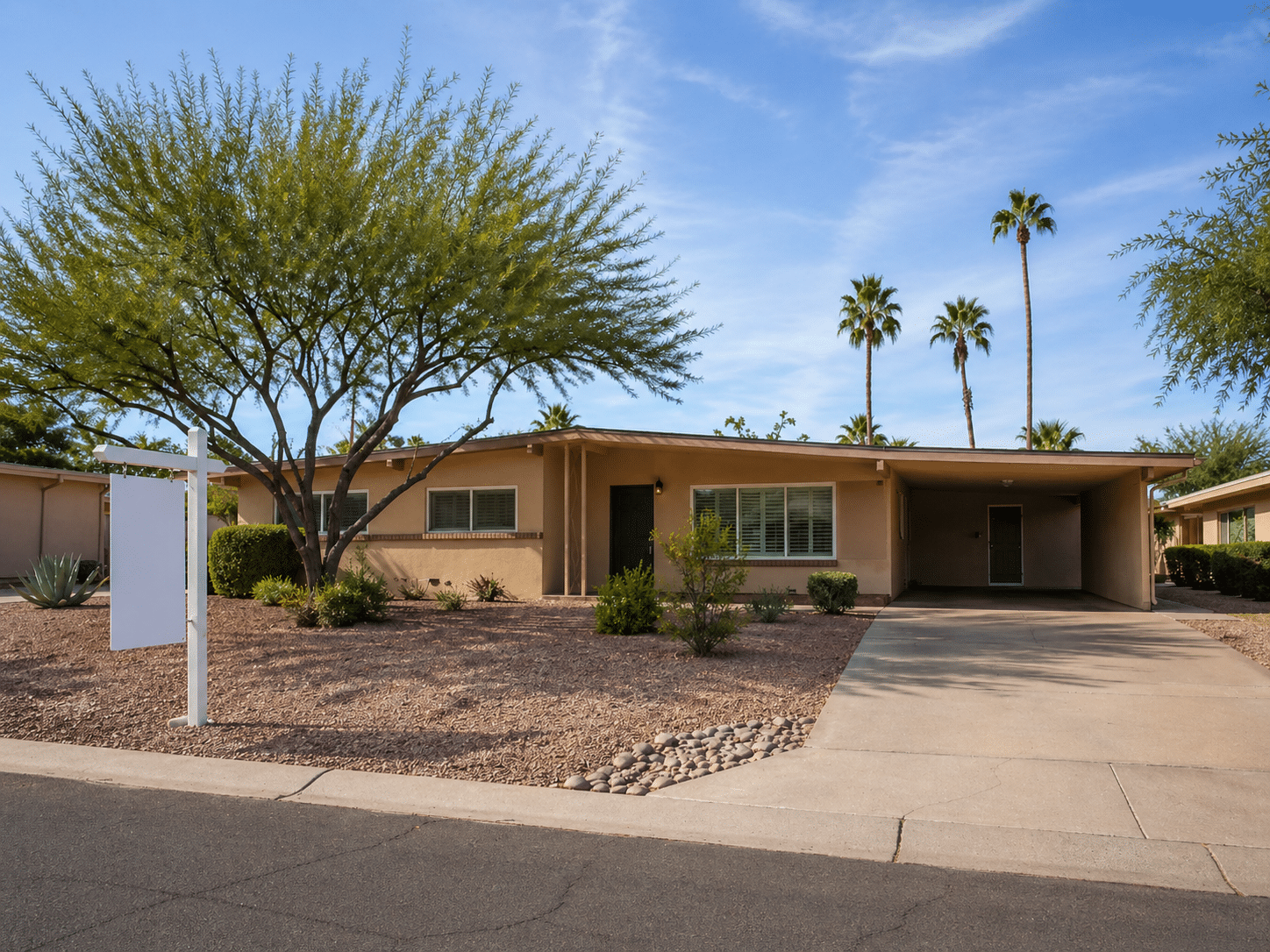
Home prices in Sun City span a wide range. Smaller original 1960s ranch homes can list in the low end of the market, while updated patio homes and larger 1970s plans on golf course lots reach into the upper ranges. Specific current price ranges should be confirmed with a 55+ specialist familiar with the community at the time of purchase, since the resale market shifts with broader Phoenix-area conditions.
Recreation Centers of Sun City charges annual dues per person, paid yearly, in exchange for full access to all seven recreation centers, the RCSC golf system, and most amenity programming. Specific dues figures change and should be confirmed with RCSC at the time of purchase. The recreation-fee model is structurally different from the master HOA assessment used in newer communities, and many buyers find that the bundled access actually lowers their effective cost of recreational living compared to private club memberships elsewhere in metro Phoenix.
Pet policies are generally permissive — most properties allow dogs and cats — but specific restrictions vary by sub-association. Arizona’s property tax framework includes a senior valuation protection program that can freeze assessed values for qualifying older homeowners, which is worth exploring with the Maricopa County Assessor before closing. Closing costs, title transfer fees, and any RCSC preservation and improvement fees that apply at sale should also be reviewed with the listing agent and a title company familiar with Sun City conveyance specifics.
Sun City is a 55+ age-restricted community protected under the federal Housing for Older Persons Act. At least one resident in each home must be 55 or older, and no permanent residents under 19 are allowed.
Sun City uses a recreation-fee model rather than a traditional HOA assessment. Annual dues to Recreation Centers of Sun City are paid per person and provide access to all seven recreation centers and amenities. Specific current dues should be confirmed with RCSC and the listing agent at the time of purchase. Property tax rates and assessments may apply separately.
Pets are generally permitted in Sun City. Specific policies on number, weight, and breed vary by sub-association and rental agreements. Confirm pet rules with the listing agent and the homeowners association governing each specific property.
Sun City is generally an open community with public streets, not a gated subdivision. The 55+ age restriction is the primary access control, enforced through deed restrictions and the HOPA framework rather than physical gates.
Banner Boswell Medical Center is located within Sun City and serves as the primary acute care hospital for the community. Banner Sun Health Research Institute, also based in Sun City, conducts nationally recognized aging and Alzheimer’s research. Banner Del E. Webb Medical Center in adjacent Sun City West provides additional acute care, and HonorHealth and Abrazo facilities serve the wider West Valley.

The Sun City buyer’s guide that experienced 55+ specialists put together for prospective residents is, in many ways, the most important resource a first-time visitor can bring with them. The community is large enough that an unstructured tour can leave a buyer overwhelmed. A guided visit, anchored on the buyer’s actual priorities — golf, pickleball, arts and crafts, walking access, lake views, location near Banner Boswell, proximity to Loop 101 — turns the size of Sun City from a barrier into a feature.
Plan to spend at least a full day in the community on a first visit, and ideally two. Mornings are best for touring rec centers and walking neighborhoods. Afternoons are well suited to driving golf course-adjacent streets and getting a sense of mountain backdrop and lot character. Plan a meal in the community to gauge restaurant access. Stop by the Sun City Visitors Center for orientation materials. Drive Del Webb Boulevard from end to end. Visit at least two of the seven recreation centers to feel the difference in character.
A specialist agent who knows the resale phases, the renovation history of typical homes, and the practical implications of choosing one neighborhood over another can compress weeks of self-guided research into a single productive afternoon. The best agents working in Sun City carry a working knowledge of the construction-era distinctions, the rec center catchment patterns, and the community’s governance structure — and they pair that knowledge with current MLS data, recent comparable sales, and an understanding of which sub-associations are tighter or looser on rental and architectural rules. Reach out to schedule a personalized tour at your convenience. Whether you are six months from a move or two years out, the time spent walking Sun City with a knowledgeable guide pays dividends when the buying decision arrives.
We use cookies to improve your experience on our site. By using our site, you consent to cookies.
Manage your cookie preferences below:
Essential cookies enable basic functions and are necessary for the proper function of the website.
CloudFlare provides web performance and security solutions, enhancing site speed and protecting against threats.
Service URL: developers.cloudflare.com (opens in a new window)
Google Tag Manager simplifies the management of marketing tags on your website without code changes.
These cookies are used for managing login functionality on this website.
Statistics cookies collect information anonymously. This information helps us understand how visitors use our website.
Google Analytics is a powerful tool that tracks and analyzes website traffic for informed marketing decisions.
Service URL: policies.google.com (opens in a new window)
You can find more information about our Cookie Policy and Privacy Policy.