

You can walk the entire perimeter of Springfield in under thirty minutes. The route runs from the guard gate on St Andrews Boulevard down past the third tee of the executive course, then traces the southern fence line behind one of the small cul-de-sacs before looping back up through the recreation-center parking. Springfield holds 742 single-story homes inside that compact footprint, and the small scale is a design choice rather than the consequence of an unfinished buildout. Pulte Homes laid out the community between 1996 and 2000, before Pulte folded Del Webb’s brand into its portfolio. The layout has aged into a tight, walkable retirement village defined now by mature trees, settled landscaping, and a clear daily rhythm. What follows is a working tour of how this 55+ golf community functions for the people who live there: the homes, the recreation center, the par-61 course, the social calendar, the drive to specialty care, and what owning a home here costs on a typical month.
Springfield reads as a single contained neighborhood rather than a sprawling masterplan. The recreation center sits near the geographic middle of the community, the executive golf course threads between the housing streets, and the guard gate on St Andrews controls one of the only two ways in or out. That layout shapes daily life in specific ways. Residents walk to morning coffee on the patio, drive a golf cart to the clubhouse for an evening card game, and rarely leave the gates for routine errands during the day.
The community is age-restricted under the federal Housing for Older Persons Act, which requires that at least one resident of each home be aged 55 or older. The age rule sets the demographic floor, and the compact site plan sets the texture of daily life on top of it.
The intimate scale produces a kind of social density that larger active adult communities cannot easily replicate. Neighbors learn each other’s morning walking routes within a week, and the same handful of golf carts shows up at the recreation center on the same days. The Wednesday and Saturday social calendars track a stable population of roughly 1,200 to 1,500 residents a fraction of the rotating cast inside a 6,000-home complex elsewhere in the East Valley.
Some buyers want a retirement community where the recreation desk knows their name in the first month, and the smaller footprint is the differentiator for them. Other buyers want anonymity, broader programming, and a deeper amenity stack, which means larger 55+ neighborhoods elsewhere in the East Valley may suit them better. Springfield commits clearly to the first category.
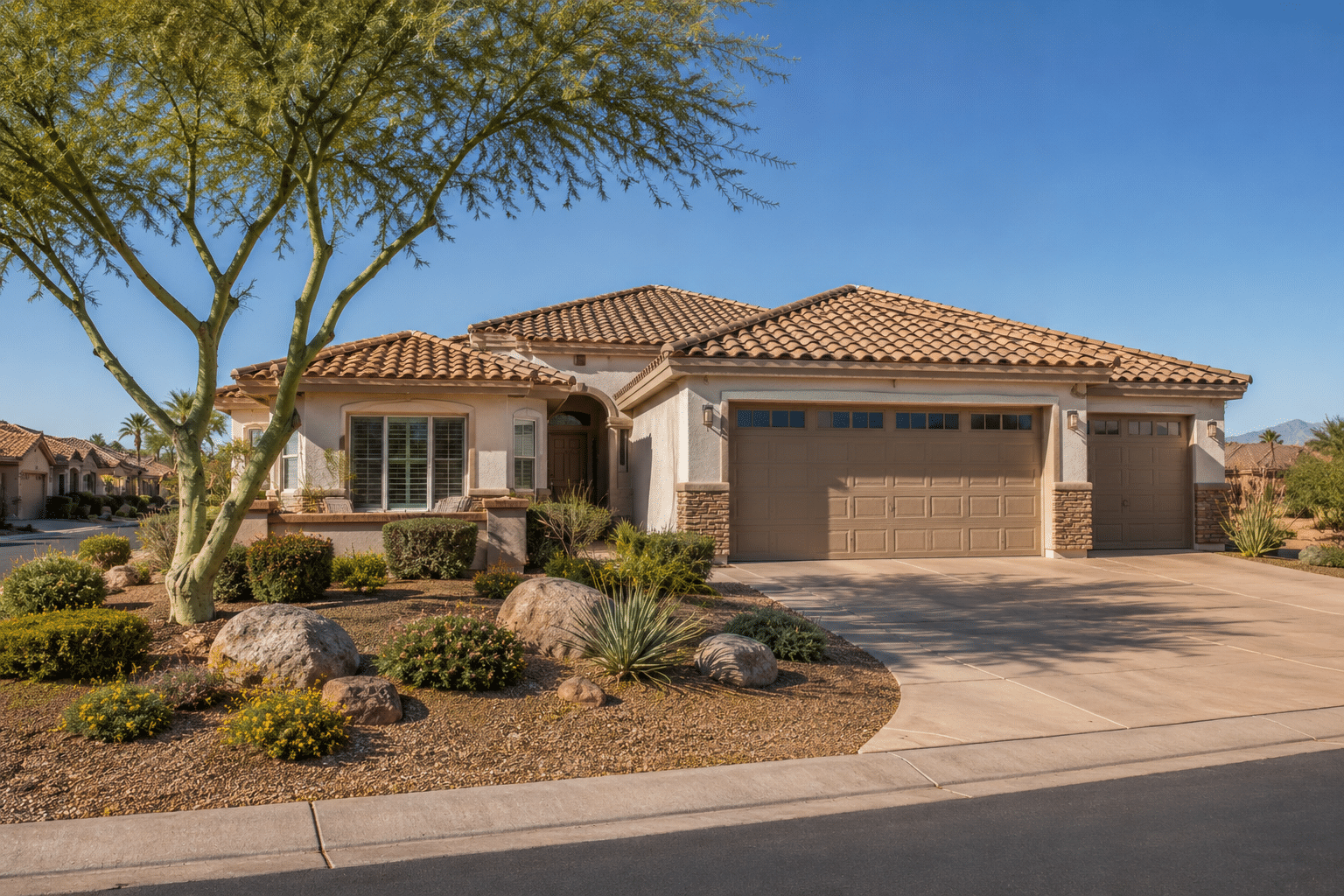
Every home at Springfield is single-level, ranch-style, and built between 1996 and 2000. Pulte sold the original home plans before the company acquired Del Webb in 2001, which means Springfield carries Pulte’s late-1990s active adult design vocabulary rather than the post-merger Del Webb floor plans found at younger Chandler communities like Solera.
Public listings put the size range from approximately 878 square feet on the smallest two-bedroom plan up to roughly 3,100 square feet on the largest configurations, with most homes falling in the 1,400 to 2,200 square foot band. Tile roofs, two-car garages, and stucco exteriors are standard across the inventory. New construction stopped in 2000, and all sales today are resale.
The bulk of Springfield’s homes are two-bedroom, two-bath plans with an attached two-car garage, and most include either a covered patio or an Arizona room off the dining area. Lot sizes run small by Phoenix-metro standards, with many sitting under 6,500 square feet. That keeps yard maintenance light, and it supports the lock-and-leave lifestyle that draws snowbird residents during the October-through-April season.
Open kitchens with breakfast bars are typical, as are vaulted living-room ceilings and primary suites positioned at the rear of the home. Resale homes commonly show updates from the past decade, including replaced HVAC systems, new water heaters, refreshed flooring, and remodeled kitchens with white shaker cabinetry. Granite or quartz counters appear in most kitchens that have been refreshed in the past five years.
The largest plans at Springfield are three-bedroom or two-bedroom-plus-den configurations approaching 3,100 square feet, and they often sit on premium lots that back to the executive course or a community greenbelt. Pricing on those homes runs well above the community’s smaller two-bedrooms.
Recent sales typically include the kinds of major-system replacements any 25- to 30-year-old Arizona home requires, with roof underlayment work, new HVAC condensers, and updated electrical panels among the most common upgrades. Buyers shopping Springfield should plan for a thorough inspection that pays particular attention to the roof, the slab, and any sub-floor moisture history. A home with documented major-system updates from the past five to seven years tends to command a meaningful premium on resale.
The amenity stack at Springfield is purpose-built for the community’s scale. There is no second clubhouse, no satellite pool, and no detached fitness annex. Everything social, recreational, and wellness-oriented sits inside a single recreation-center footprint, with the executive golf course wrapping around it.
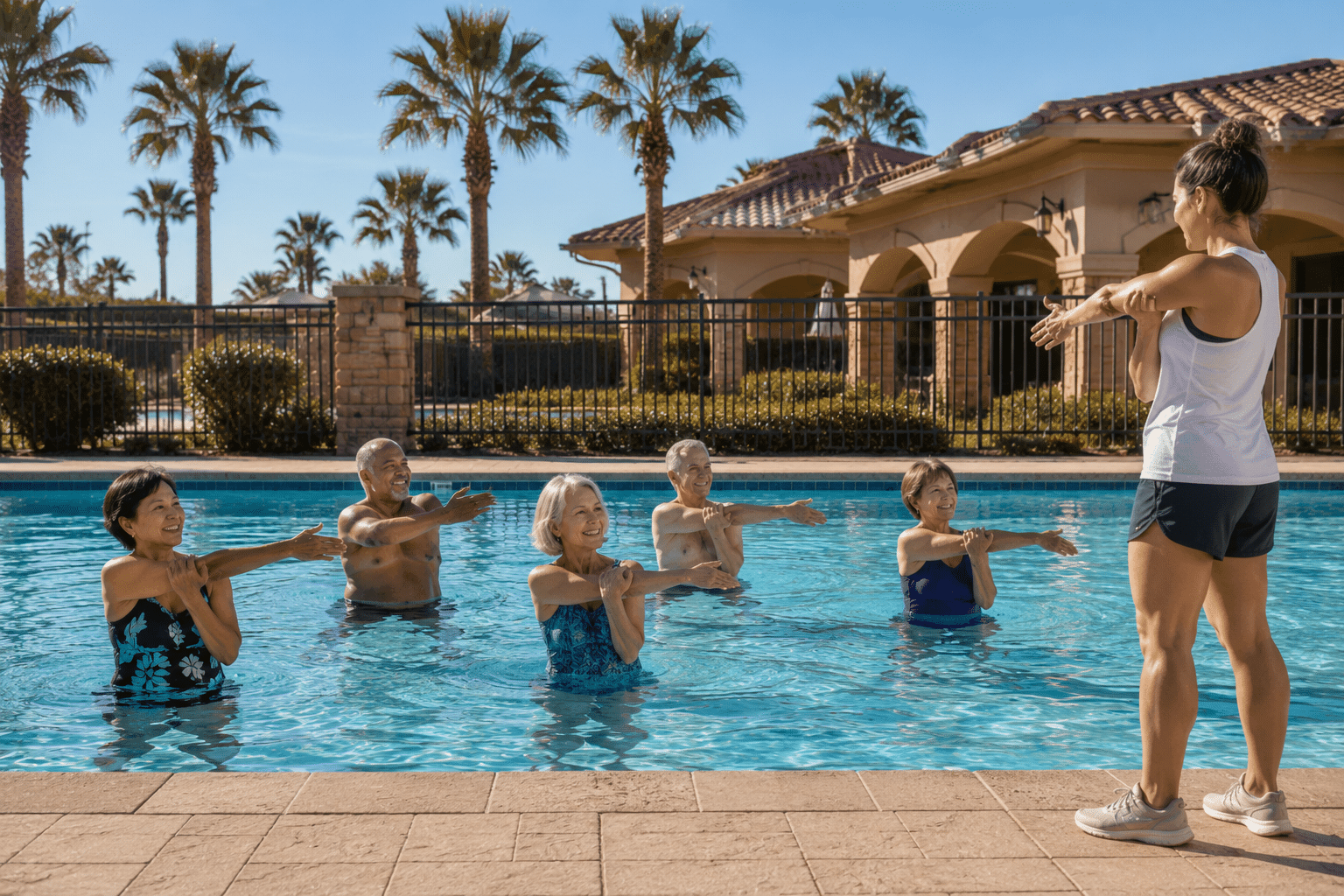
The recreation center includes two outdoor pools — a recreational pool and a separate lap pool — alongside a hot tub, an indoor fitness room, locker rooms, and a sun deck. The fitness floor carries cardio equipment, a circuit of weight machines, and free weights at a scale appropriate to a 742-home community.
Aqua fitness classes, low-impact aerobics, and stretching sessions populate the morning calendar most days. The pools are heated through the cooler months, which keeps the lap pool in active use through January and February when most outdoor pools in metro Phoenix sit empty. Springfield’s heated water keeps morning swim groups going year-round.
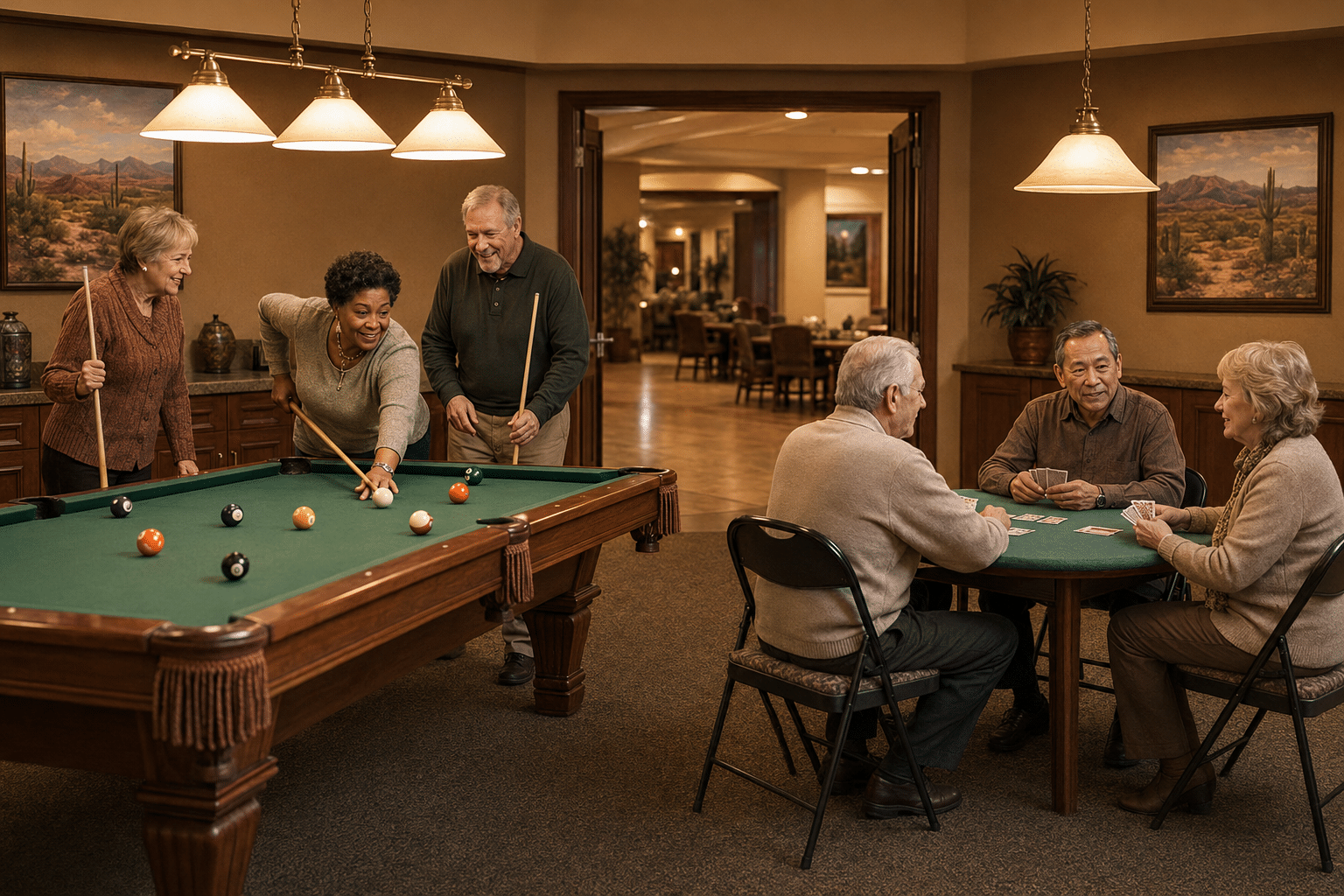
Inside the recreation center, dedicated rooms host a ceramics and pottery studio, an arts-and-crafts room, a sewing and quilting space, a billiards room, a card room, a library, and a small performance and movie theater. The ballroom doubles as the community’s primary event space, hosting parties, dances, and the bigger holiday gatherings.
None of these spaces individually rivals what a 6,000-home masterplan can offer, but the combination is unusually complete for a 742-home community. Residents do not have to drive across a sprawling campus to reach any of them; most amenities sit within a five-minute walk of any home in the community.
The 18-hole Springfield Golf Resort course is an executive layout, playing par 61 at roughly 4,231 yards from the back tees. That distinction shapes who plays it and how often. An executive course favors short irons, wedges, and putting over driver play, which makes for a faster round — most groups finish in three to three-and-a-half hours.
The course is also friendlier for golfers who no longer want to wrestle with a 7,000-yard championship layout. It is open to the public on a tee-time basis, with resident pricing for Springfield homeowners. The Eagle’s Nest Bar & Grill at the clubhouse handles breakfast, lunch, and beverages on the patio after a round, plus casual evening dining. The course sits at the doorstep without the higher annual carrying cost of a championship country-club membership, which is a specific value proposition for buyers who play three to five times a week.
The social calendar at Springfield runs on standing groups and seasonal events. The standing groups produce the weekly rhythm, with the same residents gathering at the same tables on the same days. The seasonal events produce the larger gatherings that draw most of the community at once.
Standing clubs at Springfield include 65 Rummy, Bridge, Bunco, Canasta, Bingo, Bible Study, Bocce Ball, Book Club, Bowling, and a billiards group. Sport courts adjacent to the clubhouse host the bocce, pickleball, tennis, horseshoe, shuffleboard, and basketball groups.
The mix of indoor card and craft groups with outdoor sport leagues means there is a sensible activity slot for most weather windows and most physical-comfort levels. The garden club, the pottery group, and the quilting circle anchor the craft side of the calendar. Most groups meet weekly, post their schedules at the recreation center, and welcome drop-ins for a first visit before asking for a roster commitment.
Larger gatherings populate the community calendar through the cooler months. A fall welcome event greets new residents, holiday parties run through November and December, and pancake breakfasts arrive on weekend mornings. Poker nights and the spring season-end events fill out the calendar before the summer slowdown.
Newcomers tend to find their table within the first two months, and the pattern is consistent across most resident accounts. They attend one of the open-invitation events, ask the recreation desk for the standing-group schedule, and pursue two or three groups in parallel until one fits. Residents describe the community’s social texture in similar terms across most public reviews — small-town feel, neighbors who notice when a routine changes, and a calendar full enough to fill a week without leaving the gates.
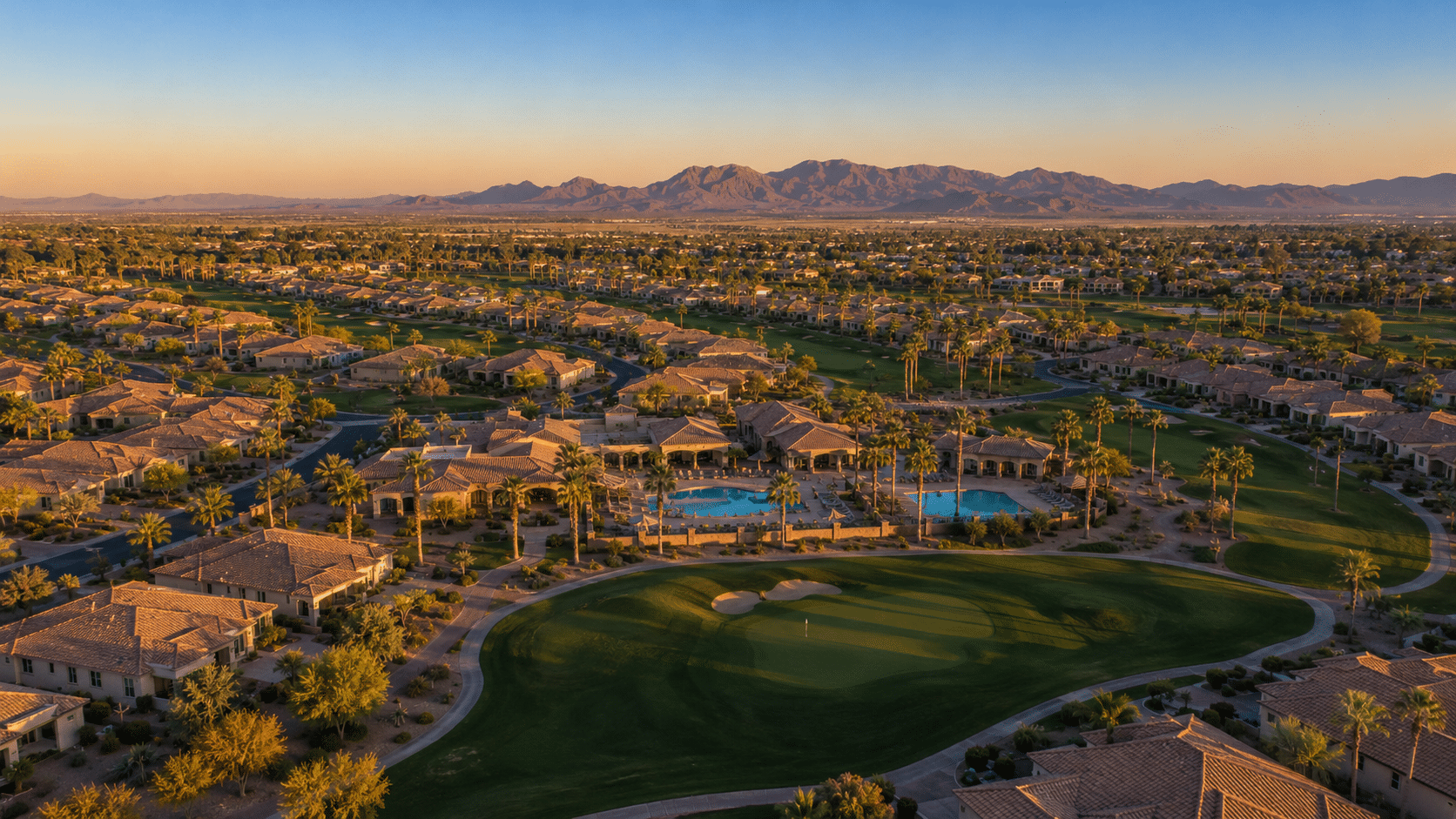
Springfield sits in the south-Chandler corridor that local listings sometimes call “retirement row.” This band of age-restricted communities runs along the Riggs Road and St Andrews Boulevard alignment, where the suburban grid edges into low desert and the San Tan foothills come into view to the southeast.
The community’s address sits roughly five miles south of the Santan Freeway (Loop 202) and roughly five miles east of Interstate 10. Both freeways are reachable through the surface-street grid in about ten to fifteen minutes during off-peak hours.
Several established 55+ communities cluster in this stretch of south Chandler — Sunbird Golf Resort, Solera, the Sun Lakes village complex just to the east, and Springfield itself — and the cluster gives the corridor its informal nickname.
The shared geography produces shared infrastructure. Bashas’ and Fry’s grocery stores sit within five miles, and the Chandler Fashion Center mall is about ten miles north. The medical corridor runs along Alma School Road, and the Gilbert and Queen Creek shopping districts are an easy reach to the east.
The trade-off is distance. Downtown Phoenix sits about thirty to thirty-five minutes north on a clear traffic day, and Phoenix Sky Harbor International Airport is roughly twenty-five to thirty miles by way of Loop 202 or Interstate 10. Residents who fly often build that drive into their planning rather than treating the airport as a casual ten-minute trip. The trade-off is part of what makes the south-Chandler price point and the quieter setting work for the right buyer.

The medical infrastructure within reach of Springfield has expanded notably over the past five years, and the additions matter for buyers thinking about long-term care access from a south-Chandler address.
Banner Ocotillo Medical Center is a four-story, 240,000-square-foot hospital on the southeast corner of Alma School Road and the Loop 202/Santan Freeway. The hospital opened in 2020 and now anchors emergency, intensive, surgical, and women’s services for the Chandler corridor.
From Springfield, the drive runs roughly six to eight miles north — about fifteen minutes in light traffic. Dignity Health Chandler Regional Medical Center is the larger established acute-care campus near Erie Street and Frye Road, sitting roughly eight to ten miles north in central Chandler. Chandler Regional handles a broader specialty mix including cardiology and neurosciences. Together, the two hospitals provide tiered acute and emergency coverage that did not exist in this configuration a decade ago.
Some specialty care reaches beyond what the Chandler hospitals handle directly. Residents typically reach into the Mayo Clinic Phoenix campus near Loop 101 and 56th Street for major appointments, a drive of about thirty-five to forty miles north. The HonorHealth network on the north side of the metro is a similar reach for orthopedic and neurological specialty work.
Several urgent-care clinics sit within five to seven miles of Springfield’s gates, including Banner Urgent Care locations and freestanding NextCare and FastMed branches that handle after-hours and same-day issues. Primary-care access in south Chandler is dense by Arizona standards, and most residents find that establishing a primary-care relationship within a five-mile radius is straightforward.

The financial picture at Springfield resolves into a smaller monthly carry than newer master-planned alternatives. Two factors drive the difference: the community is fully built out and resale-only, and the HOA structure is relatively lean for a guard-gated golf community.
Public listings cite a monthly HOA fee range of roughly $89 to $208 depending on the specific home and any sub-association arrangements [UNCONFIRMED — verify current dues with the management office]. The dues fund the guard-gated entry, common-area landscaping, the recreation center and its pools, the sport courts, the community library, and the standing programming infrastructure.
Golf is not included in HOA dues. The executive course operates on tee-time pricing, with discounted rates for Springfield homeowners. The lean HOA structure reflects the community’s small footprint and the absence of secondary clubhouses or satellite amenities.
Public listings put the average annual property tax at Springfield in the neighborhood of $1,837 per year. That figure is modest by Maricopa County standards and in line with the home values for a late-1990s build [UNCONFIRMED — verify with Maricopa County Assessor records for the specific parcel]. Resale prices vary widely by floor plan and lot, with the smallest two-bedroom homes generally trading at a meaningful discount to the larger plans on premium course-frontage or greenbelt lots.
Buyers should plan for the typical Maricopa County escrow timeline of thirty to forty-five days. Pay close attention during inspection to the items most likely to need attention on a 25- to 30-year-old Arizona home — the roof, the HVAC, the water heater, and any plumbing fittings that have not been updated since original construction. A serious offer benefits from a same-week walkthrough of the recreation center and an early-morning visit to the executive course’s first tee.
Springfield is a 55+ community. At least one resident in each occupied home must be 55 or older, consistent with the federal Housing for Older Persons Act.
Public listings typically cite a monthly HOA fee range of approximately $89 to $208 depending on the home and its specific sub-association. Buyers should verify current dues with the seller and the management office during the escrow review period.
Pets are generally permitted under standard CC&R restrictions on number, size, and conduct. Specific limits should be confirmed against the current governing documents available through the HOA office.
Yes. Springfield is guard-gated, with a staffed entry on St Andrews Boulevard controlling resident and visitor access around the clock.
Banner Ocotillo Medical Center sits roughly six to eight miles north on Alma School Road, and the Dignity Health Chandler Regional Medical Center campus is about eight to ten miles north in central Chandler. Specialty care reaches in from Mayo Clinic and HonorHealth networks farther north and east.
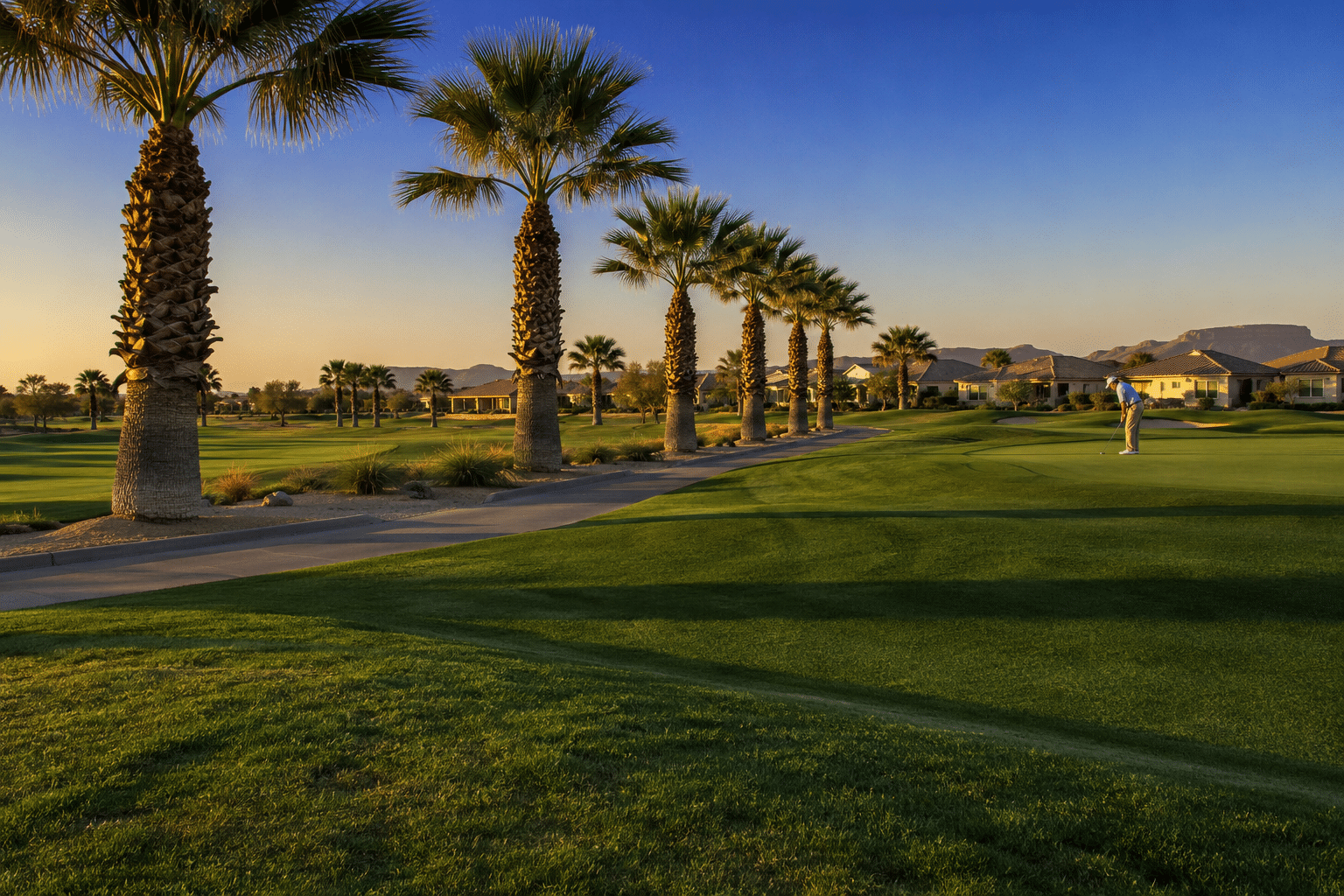
A first-time visit to Springfield works best as a half-day at the community rather than a thirty-minute drive-through with an agent. The community’s character does not photograph easily; it reveals itself in the foot traffic, the cart traffic, and the routine of a regular day at the recreation center.
Begin with a walkthrough of the recreation center on a weekday morning, when the standing groups are in session and a buyer can observe the rhythm of the place rather than a staged tour. Drive the executive course’s outer cart-path loop next, stop at the Eagle’s Nest for coffee, and listen to the table conversation for fifteen minutes.
Walk one or two of the inner cul-de-sacs to gauge street parking, garage configurations, and how mature the landscaping looks in person. Listing photos do not always show the full picture. Ask a resident at the pool about HOA communications and the most recent annual budget vote. By the end of a half-day visit, most prospective buyers have a clear answer about whether the small-scale 55+ golf community at the south end of Chandler matches their next chapter. Some buyers will find that the larger amenity stacks at Sun Lakes, the Sunbird community, or one of the newer Del Webb properties farther east is the better fit.
Tours can be coordinated through the Springfield Community Association office, and serious buyers benefit from working with an agent familiar with the community’s resale history and the specific upgrade documentation that supports a strong offer.
We use cookies to improve your experience on our site. By using our site, you consent to cookies.
Manage your cookie preferences below:
Essential cookies enable basic functions and are necessary for the proper function of the website.
CloudFlare provides web performance and security solutions, enhancing site speed and protecting against threats.
Service URL: developers.cloudflare.com (opens in a new window)
Google Tag Manager simplifies the management of marketing tags on your website without code changes.
These cookies are used for managing login functionality on this website.
Statistics cookies collect information anonymously. This information helps us understand how visitors use our website.
Google Analytics is a powerful tool that tracks and analyzes website traffic for informed marketing decisions.
Service URL: policies.google.com (opens in a new window)
You can find more information about our Cookie Policy and Privacy Policy.