

Moon Valley stands as one of North Phoenix’s most distinguished and coveted residential neighborhoods — a place where mid-century character, mountain-preserve access, and championship golf converge in a way that simply cannot be replicated in newer master-planned developments. Established in the early 1960s and centered on the prestigious Moon Valley Country Club, the neighborhood encompasses approximately 1,600 homes spread across 29 named subdivisions. Its boundaries span from 7th Street to the east and Thunderbird Road to the south, westward along Coral Gables Drive to the north and west, creating a compact, cohesive community within the greater Phoenix metropolitan area.
As an Associate Broker with West USA Realty, I’ve had the privilege of helping countless families discover why Moon Valley has remained one of Phoenix’s most sought-after addresses for more than six decades. Buyers consistently tell me they came for the golf course views and stayed for the neighborhood identity — the mature tree canopy, the winding streets, the mountain silhouettes that frame every evening. Whether you’re drawn to a lovingly updated ranch home in Hillcrest, a guard-gated estate in Coral Gables Estates, or a patio home overlooking the fairways, Moon Valley homes for sale offer a lifestyle that rewards the buyer who looks beyond the surface. The pages below tell you everything you need to know before your first showing.
Moon Valley’s character was shaped by a small circle of influential Phoenix developers who understood that a neighborhood built around a private country club demanded homes worthy of the setting. Two names stand out.
John F. Long, one of the most prolific builders in Phoenix history, brought his philosophy of spacious, quality single-family construction to North Phoenix during Moon Valley’s formative years in the 1960s. Long’s homes in this corridor were designed with the generous lot sizes and clean desert-ranch proportions that buyers still seek today. His fingerprints are visible in the straightforward block construction and the expansive covered patios that characterize so much of the neighborhood’s original housing stock.
Dell Trailor developed what many consider Moon Valley’s most celebrated enclave: Hillcrest. Trailor’s homes — primarily single-story Arizona ranch-style residences on quarter-acre-plus lots, often designed in collaboration with architect Ralph Haver — are known for their low profiles, exposed block construction, and spectacular sightlines toward North Mountain and the city lights of central Phoenix. The Hillcrest footprint includes multiple sub-enclaves: Hillcrest, Hillcrest East, and adjacent parcels that collectors of mid-century modern architecture seek out with particular enthusiasm.
Beyond Hillcrest, the neighborhood’s 29 subdivisions span a wide range of housing typologies. Coral Gables Estates occupies the western edge of the neighborhood at the base of Moon Mountain, with guard-gated streets and hillside homes that command panoramic Valley views. Moonridge Estates clusters near the golf course, offering fairway-adjacent properties and mature desert landscaping. Cresta Del Oro, Lunar Vista Estates, Moon Mountain Estates, Moon Valley Estates, and Tamarac at Moon Valley round out the inventory, delivering everything from intimate patio homes and townhome-style cluster homes to sprawling custom estates. Buyers searching Moon Valley real estate will encounter homes ranging from the original 1,600-square-foot single-story blocks of the 1960s to fully renovated luxury retreats exceeding 4,000 square feet — often on the same street.

The heart of Moon Valley — geographically and socially — is Moon Valley Country Club, a private 36-hole facility whose championship course is one of the most historically significant golf venues in Arizona. The par-72 layout was originally designed by legendary architect Dick Wilson (in collaboration with Joe Lee) and opened for play in 1959–1960. Wilson’s design represented the only Arizona course in his distinguished portfolio, which includes courses at Meadow Brook and Royal Montreal. A comprehensive $4.5 million renovation completed in 1999 by Bob Cupp, ASGCA — whose other credits include Baltimore Country Club and Pumpkin Ridge Golf Club — modernized the routing while preserving Wilson’s traditional parkland sensibility. The resulting course stretches 7,210 yards from the championship tees with a slope rating of 131 and a course rating of 74.3.
The club’s legacy in professional golf is extraordinary: Moon Valley Country Club served as the host of the LPGA Tour’s Standard Register Ping tournament from 1987 through 2003 — and it was here, in 2001, that Annika Sorenstam shot the first 59 in LPGA Tour history. That round alone cements Moon Valley’s place in professional golf’s record books. Today the club also features the MoonWalk, a members-only 18-hole par-3 course, a driving range, tennis courts, an aquatic center, a state-of-the-art fitness center, a pro shop, event space, and a full-service restaurant and bar.
Moon Valley sits at the doorstep of two major components of the Phoenix Mountains Preserve, giving residents immediate trail access that most Phoenix neighborhoods can only approximate. The Lookout Mountain Preserve lies directly adjacent to the neighborhood’s eastern edge, while the North Mountain and Shaw Butte Preserves anchor the preserve system to the south and east. Together these protected lands offer miles of desert hiking within minutes of the front door — a competitive advantage for outdoor-minded buyers that no amount of community pool infrastructure can replicate.
Top trails accessible from Moon Valley:
Moon Valley Park, located within the neighborhood boundaries, provides a beloved gathering point for families with basketball courts, tennis courts, children’s playgrounds, picnic ramadas, and the neighborhood’s iconic “Grasshopper” pedestrian bridge. Youth sports leagues use the park’s open fields throughout the cooler months, and the Moon Valley Neighborhood Association (MVNA) regularly organizes events here that reinforce the community’s exceptionally strong social fabric.

Moon Valley is served by two respected public school districts — the Washington Elementary School District (WESD) for K–8 education and the Glendale Union High School District No. 205 for grades 9–12 — a pairing that gives families a clear, well-established educational pathway from kindergarten through graduation.
Moon Mountain Elementary School and Lookout Mountain Elementary School are the two primary feeders for the Moon Valley attendance zone, both operating within the Washington Elementary School District. WESD is the largest elementary-only district in Arizona, serving more than 25,300 students across 32 schools in north-central Phoenix. The district offers Gifted Services at every school, including self-contained programs for highly gifted learners — a feature that distinguishes WESD from many peer districts across the Valley. Lookout Mountain Elementary, in particular, has long enjoyed a strong community reputation for academic rigor, and its convenient location along the Hillcrest corridor makes it especially accessible for families in that enclave.
Shaw Butte Elementary School also falls within WESD boundaries and serves portions of the neighborhood. Multiple Title I support programs operate across the district for students requiring supplemental instruction, ensuring no learner is left behind regardless of academic starting point.
Mountain Sky Junior High School (WESD) bridges elementary and high school for most Moon Valley students, offering a broad academic curriculum alongside extracurricular programs in athletics, performing arts, and STEM.
Moon Valley High School — located at 3625 West Cactus Road and part of the Glendale Union High School District — is the cornerstone secondary institution for the community. Established in 1965, the school currently enrolls approximately 1,470 students in grades 9–12. Its academic profile is strong: a 96% graduation rate, a 38% Advanced Placement participation rate, a Gifted & Talented program, and 29 varsity sports programs including a historically acclaimed girls’ softball team. The school has been recognized by the Arizona Department of Education as an “excelling school” and earned national recognition through the Got Milk? contest as the Healthiest School in Arizona. A second high school option — Greenway High School — also falls within the Glendale Union district and is accessible to families in portions of the western Moon Valley boundaries.
Moon Valley residents enjoy enviable proximity to one of Phoenix’s most historic shopping destinations: Christown Spectrum, a 1.2-million-square-foot power center located along Bethany Home Road between 19th and 15th avenues, just south of the community. Phoenix’s oldest operating mall (opened in 1961 as Chris-Town Mall), Christown Spectrum has undergone extensive revitalization under Kimco Realty and now hosts anchor tenants including SuperTarget, Walmart Supercenter, Burlington, Hobby Lobby, American Furniture Warehouse, PetSmart, Ross Dress for Less, Big 5 Sporting Goods, and a Harkins Theatre multiplex. The combination of big-box retail, entertainment, and everyday service businesses in a single walkable campus makes this a genuinely convenient hub for Moon Valley households.
For neighborhood-scale daily needs, the Thunderbird Road and Cactus Road commercial corridors deliver grocery stores, pharmacies, coffee shops, and casual dining within a short drive. Safeway and several specialty grocery options anchor the everyday food shopping rotation. Local dining favorites include Moon Valley Café for weekend brunch and Serafina Coffee Roasters for specialty coffee. The Thunderbird corridor also supports a range of boutique fitness studios, yoga and pilates spaces, and professional service providers — reflecting the neighborhood’s mix of young families and established professionals.
Residents benefit from one of the strongest healthcare anchors in all of North Phoenix: HonorHealth John C. Lincoln Medical Center, located at 250 E. Dunlap Avenue approximately four miles south of Moon Valley’s core. The 262-bed facility is a five-time Magnet®-designated institution — the highest national standard for nursing excellence — and holds designation as an American College of Surgeons-verified Level I Trauma Center, the northernmost such center serving central Arizona. The hospital is a recognized leader in robotic and minimally invasive surgery and offers advanced cardiac imaging. HonorHealth Medical Group operates multiple primary and specialty care clinics throughout the north Phoenix area for everyday and preventive care needs.
Moon Valley sits at one of the best freeway intersections in Phoenix for a neighborhood of its vintage. Interstate 17 (Black Canyon Freeway) runs along the western edge of the community, providing rapid southbound access to downtown Phoenix (approximately 12 miles, 15–20 minutes off-peak) and northbound connections to Anthem, Flagstaff, and beyond. State Route 51 (Piestewa Freeway) is accessible to the east via Thunderbird or Cave Creek Road, linking residents to Scottsdale, Paradise Valley, and Phoenix Sky Harbor International Airport in roughly 20 minutes. Loop 101 (Pima/Agua Fria Freeway) lies approximately three miles north, connecting Moon Valley to both the East Valley and the far West Valley corridors. North 7th Street bisects the community and runs straight south to downtown Phoenix, providing a reliable surface street alternative during commute hours. Valley Metro bus service operates stops throughout the neighborhood for riders who prefer transit.
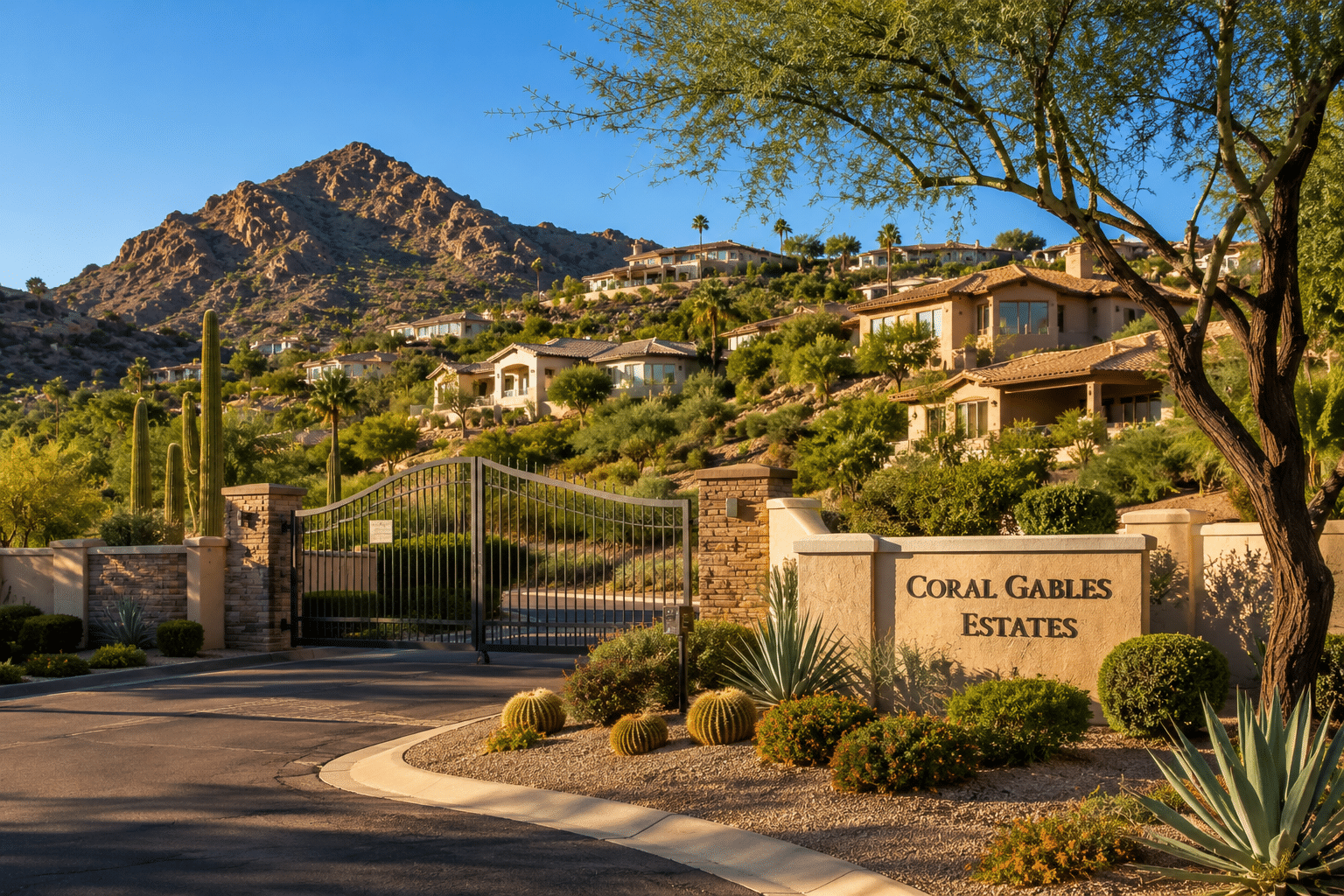
Few neighborhoods in the Phoenix metropolitan area blend heritage, lifestyle, and location the way Moon Valley does. You’re buying into a community where the golf course has hosted professional championships, where mountain trails begin at the end of your street, and where the architectural character of the 1960s has proven its enduring value across six decades of appreciation. The Moon Valley homes for sale market reflects that desirability: median sale prices in the neighborhood consistently run 75–80% above the broader Phoenix citywide median, and demand from qualified buyers remains steady throughout the year.
As your broker at West USA Realty, I bring deep market knowledge and a genuine passion for matching buyers to the right home — not just the right price point. Ready to discover your perfect Moon Valley home? Contact Carl Chapman at (602) 617-4440.

Moon Valley homes for sale span a wide spectrum of vintages, sizes, and price points, creating opportunities for first-time buyers entering a legacy neighborhood and luxury buyers seeking a coveted golf-course or mountainside address. Median sale prices tracked approximately $810,000–$830,000 through late 2024 and into 2025, representing a year-over-year appreciation rate in the range of 2–9% depending on the sub-period measured (source: Redfin/ARMLS). Price per square foot has ranged from approximately $300–$360 for move-in-ready inventory. Average days on market have fluctuated between 35 and 55 days, consistent with a low-inventory, high-demand neighborhood where well-priced listings move promptly. The inventory mix spans original 1960s–1980s ranch homes, fully renovated mid-century moderns in Hillcrest, guard-gated estate properties in Coral Gables Estates, and fairway-adjacent patio homes near the Moon Valley Country Club. All market data should be confirmed against current ARMLS figures at time of purchase.

Moon Valley falls within the Washington Elementary School District for K–8 and the Glendale Union High School District No. 205 for grades 9–12 — a combination that offers families a stable, well-resourced public school pathway. Lookout Mountain Elementary School and Moon Mountain Elementary School serve the elementary grades, with the former carrying a particularly strong community reputation. Shaw Butte Elementary School serves portions of the neighborhood’s boundaries. Mountain Sky Junior High School provides the middle school bridge. At the secondary level, Moon Valley High School reports a 96% graduation rate and a 38% Advanced Placement participation rate; the school’s Gifted & Talented program and 29-sport athletic department give students broad options beyond the core academic curriculum. Charter school alternatives are available in the surrounding area for families seeking additional choice within the Phoenix metropolitan area.

Moon Valley delivers a concentration of private-club and public-park amenities that few comparably sized Phoenix neighborhoods can match. Moon Valley Country Club sits at the geographic center of the community, offering members access to the 7,210-yard Dick Wilson/Bob Cupp championship golf course, the MoonWalk par-3 course, a driving range, aquatic center, fitness center, tennis courts, a pro shop, event space, and a full-service restaurant and bar. For residents who prefer public recreation, Moon Valley Park provides basketball courts, tennis courts, children’s playgrounds, and open green space anchored by the neighborhood’s iconic Grasshopper bridge. The bordering Lookout Mountain Preserve and North Mountain and Shaw Butte Preserves extend the effective amenity footprint enormously, placing miles of desert hiking, trail running, and wildlife-watching habitat within minutes of every front door. Numerous private pool homes throughout the neighborhood’s 29 subdivisions complete the outdoor lifestyle picture.

Everyday retail and dining needs are well covered by the Christown Spectrum power center, which anchors the neighborhood’s southern retail corridor along Bethany Home Road. Tenants include SuperTarget, Walmart Supercenter, Burlington, Hobby Lobby, PetSmart, Ross Dress for Less, and a Harkins Theatre for evening entertainment. The Thunderbird Road corridor between 19th Avenue and 7th Street supports a dense strip of grocery, pharmacy, and casual dining options including Safeway, Moon Valley Café, and Serafina Coffee Roasters. Residents seeking elevated retail can reach Kierland Commons, Scottsdale Quarter, and Biltmore Fashion Park in 20–30 minutes via SR-51, while the Desert Ridge Marketplace — home to dozens of national dining concepts — sits approximately 15 minutes north on Interstate 17.

Moon Valley occupies one of North Phoenix’s strongest freeway-access positions. Interstate 17 runs along the community’s western flank, delivering downtown Phoenix in 15–20 minutes and connecting northward toward Peoria, Anthem, and Interstate 40 at Flagstaff. State Route 51 is accessible within five minutes via Thunderbird Road, providing a direct corridor to Scottsdale, the Loop 202, and Phoenix Sky Harbor International Airport approximately 17–20 miles to the southeast. Loop 101 (Pima/Agua Fria Freeway) sits roughly three miles north, serving commuters who work in either the East Valley or West Valley employment corridors. North 7th Street runs through the heart of the neighborhood and delivers a reliable 20-minute drive to central Phoenix. Valley Metro bus service covers key routes, and dedicated bike lanes on East Greenway Parkway support cyclists. Maricopa County’s car-centric infrastructure means most residents commute by personal vehicle.

Moon Valley carries a consistently favorable safety profile relative to the broader Phoenix market — a reputation reinforced by the neighborhood’s strong homeowner engagement through the Moon Valley Neighborhood Association (MVNA). Multiple sub-enclaves within the neighborhood, most notably Coral Gables Estates, operate as gated communities with controlled vehicular access, providing an additional layer of security for residents seeking that feature. Neighborhood Watch programs are active across several of the 29 subdivisions. The Phoenix Police Department’s Cactus Park Precinct provides primary law enforcement coverage for this portion of North Phoenix, with supplemental response from nearby fire stations managed by the Phoenix Fire Department. Consistent street lighting, well-maintained sidewalks, and the neighborhood’s established, owner-occupied character contribute to a calm, low-transient residential environment.

Residents of Moon Valley are served by a robust healthcare network anchored by HonorHealth John C. Lincoln Medical Center at 250 E. Dunlap Avenue — approximately four miles south of the neighborhood’s geographic center. The 262-bed facility carries five consecutive Magnet® nursing excellence designations and is the northernmost Level I Trauma Center in central Arizona, accepting approximately 3,000 acute trauma admissions annually and serving a catchment area extending into northern Arizona and parts of New Mexico. The hospital’s specialties include robotic and minimally invasive surgery, advanced cardiac imaging, and neurosurgery. HonorHealth Medical Group operates multiple primary and urgent care clinics within a 10-minute drive for non-emergency needs. Banner Health facilities, including those in the Deer Valley and north Scottsdale corridors, provide additional inpatient and specialty care options within a 20-minute drive.

The Phoenix Mountains Preserve — specifically Lookout Mountain Preserve and the North Mountain and Shaw Butte Preserves — places thousands of acres of protected Sonoran Desert directly adjacent to Moon Valley’s residential streets. Hikers, trail runners, mountain bikers, birding enthusiasts, and families with young explorers all find year-round programming in these public lands. The trail system includes the Shaw Butte Trail (summit elevation 2,149 ft), the North Mountain Summit, and the Lookout Mountain Loop, providing options ranging from leisurely morning walks to strenuous weekend climbs. The North Mountain Visitor Center on North 7th Street serves as an excellent entry point with maps, wildlife information, and event programming. Beyond the preserves, Moon Valley Country Club hosts member golf tournaments and junior programs throughout the cooler months, while the neighborhood’s extensive private-pool inventory ensures the outdoor lifestyle continues through Phoenix’s warm-weather season without missing a beat.

Moon Valley benefits from one of the most engaged neighborhood associations in Phoenix. The Moon Valley Neighborhood Association (MVNA) — deliberately structured as a community organization rather than a rule-enforcement HOA — organizes block parties, seasonal clean-up days, holiday gatherings, and civic advocacy initiatives that keep residents connected across the neighborhood’s 29 subdivisions. The MVNA’s governing principles were established in the 1960s and have guided the community’s direction ever since, prioritizing neighborhood pride and quality-of-life improvements over restrictive architectural mandates. Informal events orbit the Moon Valley Country Club social calendar throughout the year, including member tournaments, dining events, and themed celebrations. The Lookout Mountain and North Mountain trailheads draw weekend hiking groups, and the Moon Valley Park grounds host youth sports seasons each fall and spring.

Phoenix delivers approximately 300 days of sunshine annually, and Moon Valley’s north-central positioning places it within the city’s standard Sonoran Desert climate zone. Summer high temperatures regularly reach 105–112°F from late June through early September; winter highs average a pleasant 65–70°F with overnight lows occasionally dipping to the high 30s between December and February. Annual rainfall averages approximately 8 inches, with the bulk delivered during the monsoon season (mid-June through September) in brief, intense afternoon and evening storms. Moon Valley’s slight elevation above the Valley floor — and its proximity to the Phoenix Mountains — can produce marginally cooler overnight temperatures than lower-lying neighborhoods closer to downtown, a microclimate detail that longtime residents appreciate during summer evenings. Homeowners throughout the neighborhood invest in energy-efficient upgrades, including upgraded insulation, low-e windows, and smart irrigation systems, to manage utility costs across the extremes of the desert year.

Moon Valley’s governance structure is intentionally light by Phoenix standards. The overarching Moon Valley Neighborhood Association operates without the restrictive rule enforcement typical of a traditional HOA, focusing instead on community programming, beautification, and communication. That said, several individual subdivisions within the neighborhood maintain their own sub-associations: Coral Gables Estates operates as a gated community with its own HOA governing architectural standards and community access. Tamarac at Moon Valley and several other cluster-home enclaves maintain sub-association structures covering common areas, shared landscaping, and exterior maintenance standards. Buyers should verify which sub-association, if any, applies to a specific property at time of purchase. Maricopa County zoning designations apply throughout the neighborhood, and Phoenix building code governs all renovation and new construction activity. No flood plain issues are generally associated with the core Moon Valley residential streets, though portions near the Moon Valley Wash may carry different FEMA designations — review the flood map for any specific parcel.

Moon Valley’s north-central Phoenix location delivers commute access to several of Arizona’s most dynamic employment corridors. Honeywell Aerospace, headquartered in Phoenix with its primary facility near the SR-51/Deer Valley corridor, employs thousands of engineering, manufacturing, and research professionals and represents one of the largest aerospace employers in the state. American Express operates its largest regional campus at Desert Ridge on the Loop 101, employing tens of thousands across financial services, customer operations, and technology roles. USAA maintains a significant regional campus in the Phoenix area serving financial services professionals. The I-17 corridor north of Moon Valley has attracted manufacturing and logistics investment, including the TSMC Arizona semiconductor fabrication project in north Phoenix — a multibillion-dollar development that is generating a sustained wave of high-technology employment across Maricopa County. The established banking, healthcare, and professional services sectors in central Phoenix and Scottsdale are all accessible within 20–30 minutes, reinforcing Moon Valley’s appeal to dual-income professional households.

Property taxes in Moon Valley are assessed under Maricopa County’s standard methodology, with effective rates typically falling in the range of 1.0–1.3% of assessed (limited) value — broadly consistent with the Phoenix metro average. Specific annual tax bills vary by parcel, assessed value, exemptions, and applicable special district levies; buyers should confirm figures on the Maricopa County Assessor’s website for any specific property. HOA fees depend on the individual sub-association: homes governed solely by the MVNA carry no mandatory fee, while gated sub-enclaves such as Coral Gables Estates carry their own fee structures that should be verified during the due diligence period. Monthly utility costs in Phoenix generally range from $150–$300 for electricity depending on home size and efficiency, with significant variation in the summer months. Overall, the Phoenix metropolitan area’s cost of living runs approximately 6% above the national average — modest relative to the lifestyle, employment access, and real estate value that Moon Valley provides.

Moon Valley falls within the corporate limits of the City of Phoenix, which delivers a full suite of municipal services including trash and recycling collection (weekly curbside service), street maintenance, public works, parks management, and building permitting. Residents participate in Phoenix’s district-based City Council representation; the North Mountain urban village that encompasses Moon Valley is served by the corresponding council district. Phoenix Parks and Recreation manages the adjacent Lookout Mountain Preserve, North Mountain Preserve, and Moon Valley Park, maintaining trail systems, trailhead facilities, and the North Mountain Visitor Center year-round. Water service is delivered through the City of Phoenix Water Services Department, which draws from Salt River Project and Central Arizona Project infrastructure. The Moon Valley Neighborhood Association collaborates with City of Phoenix staff on neighborhood improvement initiatives, streetscape projects, and community safety programs, giving Moon Valley residents a direct and effective channel for civic engagement.
We use cookies to improve your experience on our site. By using our site, you consent to cookies.
Manage your cookie preferences below:
Essential cookies enable basic functions and are necessary for the proper function of the website.
CloudFlare provides web performance and security solutions, enhancing site speed and protecting against threats.
Service URL: developers.cloudflare.com (opens in a new window)
Google Tag Manager simplifies the management of marketing tags on your website without code changes.
These cookies are used for managing login functionality on this website.
Statistics cookies collect information anonymously. This information helps us understand how visitors use our website.
Google Analytics is a powerful tool that tracks and analyzes website traffic for informed marketing decisions.
Service URL: policies.google.com (opens in a new window)
You can find more information about our Cookie Policy and Privacy Policy.